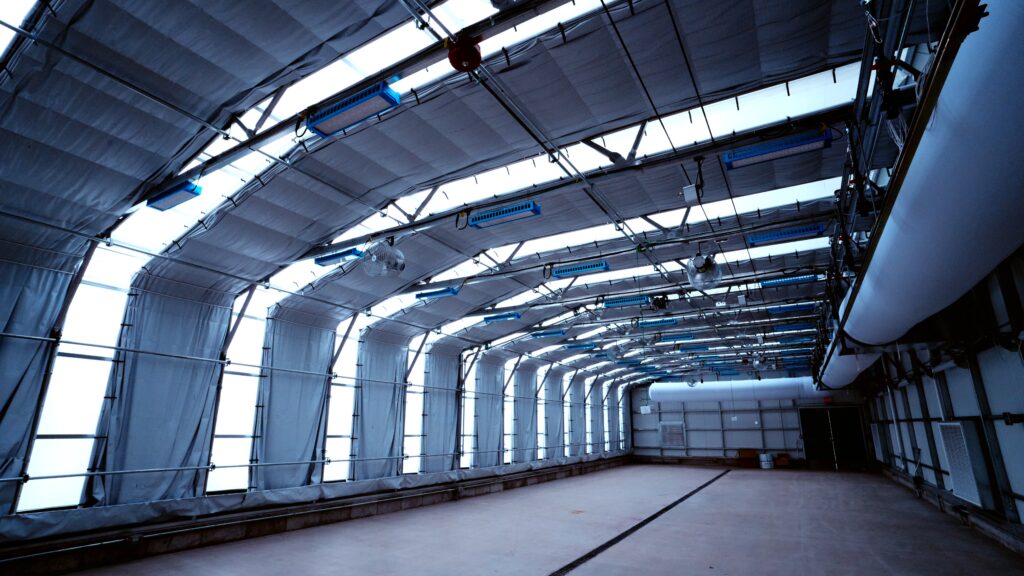
Some multi-function breeding facilities house both plant production and disease trials in separate, independently controlled zones within one greenhouse complex. Production zones grow seedlings and breeding material under stable conditions. Layout, airflow, and sanitation protocols isolate disease trial zones so pathogens stay contained and trial data stays consistent.
This article explains how the two functions are separated, what environmental conditions each zone requires, and how Ceres applied these principles in a research greenhouse complex for KWS Seeds in Kimberly, Idaho.
What is a Multi-Function Breeding Facility?
A multi-function breeding facility is a single research site that combines several stages of a plant breeding program in dedicated zones. These typically include production of seedlings and breeding material using flowering control through vernalization or photoperiod management, as well as disease trialing.
A standard research greenhouse is often built around one type of work, such as controlled crop trials or growth studies. A production greenhouse is built for yield and throughput. A multi-function breeding facility sits between the two. It needs production-scale capacity for growing plant material and research-grade control for the trials that evaluate it.
Seed and genetics companies, university breeding programs, and government research stations use this model when their breeding cycle depends on moving plant material through several controlled stages on a set schedule.
For a broader look at how research greenhouses differ from commercial facilities, see our guide on How to Design a Greenhouse for Plant Research
Why Do Breeding Programs Combine Production and Disease Trials in One Facility?
Breeding programs combine production and disease trials on one site to share infrastructure, shorten the distance plant material travels between stages, and to manage the full breeding cycle from one control and monitoring system.
When seedling production and disease trialing happen at separate sites, plant material has to be packed, transported, and acclimated at each transfer. Co-locating these functions reduces handling and allows researchers to move material between stages on a schedule that matches the breeding program rather than shipping logistics. Staff can work across functions without traveling between sites, and environmental data from every zone is recorded in one system.
Co-location also means pathogens used in disease trials are present on the same site as the clean plant material that feeds those trials. The facility design has to account for this from the start. Zone layout, air handling, and staff workflow are considered and designed together so each function operates under its own conditions without affecting the others.
How is a Breeding Facility Separated into Production and Disease Trial Zones?
A breeding facility separates production and disease trial zones through physical compartmentalization, independent air handling for each zone, and a one-directional workflow that moves people and material from clean areas toward trial areas, but not in the other direction.
Compartment layout
Each function occupies its own compartment with solid partitions between zones. In many facilities, the headhouse sits between compartments and acts as the shared workspace for potting, seed handling, and storage. Placing the headhouse on the production side of the layout keeps clean work areas physically removed from disease trial compartments.
Independent air handling
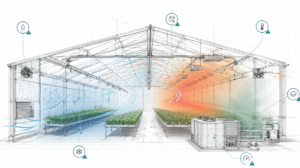
Each zone runs on its own heating, cooling, ventilation, and humidity control. Separate air handling prevents air from a disease trial compartment from reaching production zones through shared ductwork. It also allows each zone to hold different set points without one zone’s demand affecting another.
Disease trial compartments are commonly held at a lower air pressure (negative pressure) than adjacent spaces, so air moves into the trial area when a door opens rather than out of it (positive pressure).
Circulation and workflow
Staff and material circulation follows a production-to-trials direction. Researchers begin work in production zones and finish in disease trial zones, rather than moving back and forth during the day. Anterooms or vestibules at the entrance to each trial compartment provide space for changing protective clothing, washing hands, and cleaning footwear. Tools also should not be interchanged between the two zones.
Cleanable surfaces and sanitation points
Benches, floors, and wall surfaces in trial zones are selected for regular cleaning and disinfection. Floor drains, bench materials, and wall-to-floor transitions are detailed so water and debris do not collect in areas that are difficult to clean.
What Environmental Conditions Do Disease Trials Require?
Disease trials can require tightly controlled temperature, sustained high humidity during inoculation and infection periods, and conditions that can be repeated across trial runs and seasons. Some trial zones have less stringent environmental conditions compared to production zones because speed of growth isn’t as important in this stage of research, as most attention is being paid to how the plants respond to infection.
Humidity and leaf wetness
Many foliar pathogens need extended periods of high humidity or leaf wetness to infect a host plant. Disease trial zones are equipped to raise and hold humidity for defined periods after inoculation, then return to standard growing conditions. Fogging or misting systems, paired with humidity sensors at plant height, allow researchers to set and document these periods for each trial.
Condensation management
Sustained high humidity increases the likelihood of condensation on glazing and structural members. Condensation that drips onto plants can spread pathogens between samples and affect trial results. Glazing selection, air movement across interior surfaces, and heating layout are designed together to limit condensation in these zones.
Temperature stability
Pathogen development rates respond to temperature. Holding a stable set point across the full trial period allows disease progression to be compared between plant lines and between replicate trials.
Light and shade control
Light intensity affects both plant growth and disease development. Supplemental lighting and adjustable shade systems allow each disease trial zone to follow a defined light regime regardless of outdoor conditions.
Consistency between replicates
The value of a disease trial depends on whether its results can be compared with other trials. Independent zone control, sensor placement at plant level, and continuous data logging give researchers a record of the conditions each trial ran under. This record supports comparisons across seasons and between trial runs.
How Does Containment Work in a Plant Disease Research Greenhouse?
Containment in a plant disease research greenhouse combines structural measures, such as sealed zones, insect screening, and controlled drainage, with operational protocols. The required level of containment depends on the organism being studied and the permits that apply to it.
In the United States, the NIH Guidelines for Research Involving Recombinant or Synthetic Nucleic Acid Molecules define four plant biosafety levels in Appendix L, ranging from BL1-P to BL4-P. Work with regulated plant pests generally requires a USDA APHIS PPQ 526 permit, which can specify facility and handling requirements. The publication A Practical Guide to Containment: Plant Biosafety in Research Greenhouses, from Information Systems for Biotechnology, offers additional detail on how these requirements translate into greenhouse design.
Structural containment measures can include:
- Sealed glazing and joints to limit air leakage
- Insect screening on ventilation openings
- Anterooms with self-closing doors
- Collection and treatment of drainage water in higher-containment zones
- Designated areas for decontaminating plant waste before it leaves the facility
Operational measures, such as protective clothing, access control, and waste handling procedures, are set by the research organization and its biosafety guidelines. Facility design supports these procedures by providing the space, finishes, and equipment they require.
Vernalization and Flowering Control
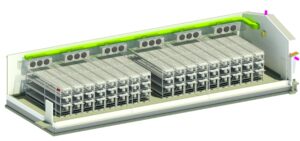
Many breeding facilities include a vernalization chamber or photoperiod-controlled zones so breeders can induce flowering on a set schedule. In a multi-function facility, these spaces run as their own independent zones alongside production and disease trial compartments.
For a detailed look at how vernalization chambers and photoperiod systems are engineered, see our article on Vernalization and Photoperiod Control in Research Greenhouses.
How Does Energy Modeling Inform Multi-Zone Facility Design?
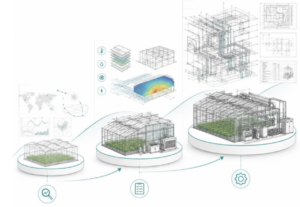
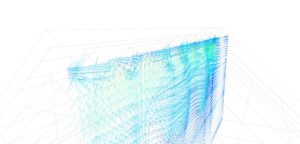
Each zone in a breeding facility carries a different heating, cooling, and dehumidification load. Energy modeling during design uses site-specific climate data to size mechanical systems for each zone and to test how those systems perform across a full year of weather conditions.
A disease trial zone holding high humidity has a different humidification, dehumidification, and heating profile than a production zone or a vernalization chamber. Modeling these zones individually, and as a combined facility, allows mechanical systems to be sized for actual demand in each space.
To learn how Ceres uses modeling in the design process, see our page on greenhouse simulation and energy modeling.
Case Study: KWS Seeds Research Greenhouse, Kimberly, Idaho
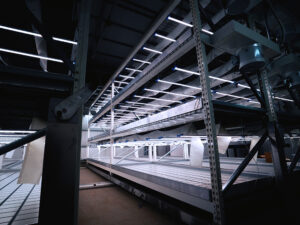
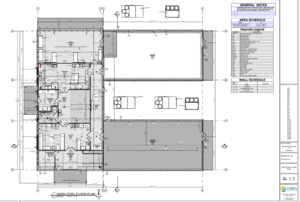
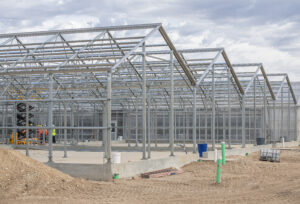
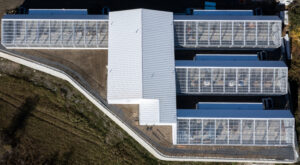
KWS Seeds expanded its sugarbeet breeding and research station in Kimberly, Idaho, with a new research greenhouse complex built in two parts. One facility supports seedling production for sugarbeet trials, and the other is dedicated to plant disease management research. Ceres Greenhouse Solutions designed, engineered, and equipped the complex and worked with general contractor Starr Corporation from groundbreaking through opening.
Key features of the facility include:
- Four independent plant zones, each with its own temperature and humidity set points
- Physical separation between seedling production and disease management research, allowing clean plant material and disease trials to operate on the same site
- A dedicated vernalization chamber for scheduled flowering (covered in more detail in our vernalization post
- Single-dashboard management of all zones, giving researchers one system for monitoring and adjusting conditions across functions
The facility supports KWS’s work developing sugarbeet hybrids with improved disease tolerance and yield. Read the full KWS sugarbeet research greenhouse case study.
What Should Research Teams Define Before Starting a Breeding Facility Project?
Before design begins, research teams should define their crop species, target pathogens and permit requirements, trial throughput, number of zones, data and monitoring needs, and plans for future expansion.
A clear set of requirements at the start of a project allows the design team to plan zone layout, mechanical systems, and containment measures together. Useful questions to answer include:
- Crops: Which species will the facility support, and do any require vernalization or photoperiod control?
- Pathogens and permits: Which organisms will be used in disease trials, and what permits and containment levels apply?
- Throughput: How many plant lines and trials will run at the same time, and how often will material move between zones?
- Zones: How many independent environments are needed, and what set points will each hold?
- Data: What environmental data needs to be recorded, at what intervals, and in what format?
- Expansion: Is additional capacity or a new function likely within the facility’s planning horizon?
Answers to these questions shape the facility’s footprint, systems, and budget. They also provide a basis for comparing design options during early planning.
For more on Ceres research facilities, see our Research & Controlled Environment Greenhouses page
Speak with a Ceres Engineer
Ceres designs research and breeding facilities for seed companies, universities, and government research programs.