A university research greenhouse needs multiple, isolated climate zones, not the single shared environment that works for a teaching or production greenhouse. That difference drives nearly every other design decision, from HVACD systems to glazing to how the facility supports outside partnerships.
Why Do Research Greenhouses Need Multiple, Isolated Environments?
In a teaching or production greenhouse, one shared climate usually does the job. In a university research greenhouse, that same approach undermines the whole point of the facility.
Researchers are rarely testing just one thing. A faculty member might be evaluating a new wheat variety’s drought tolerance in one part of the building, while a graduate student down the hall studies how a different crop responds to simulated high-altitude conditions. Neither experiment can share a climate zone with the other without compromising the data.
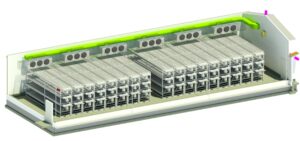
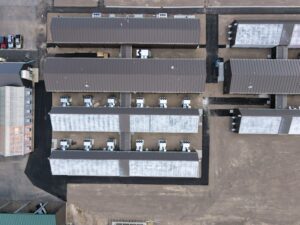
University greenhouses are typically built as a series of individual, compartmentalized zones rather than one open structure, so each zone can maintain its own temperature, humidity, and airflow profile, isolated from whatever is happening next door. It’s less like one greenhouse and more like a row of independent labs sharing a roofline.
Where New Technology Gets Tested First
Universities are often where greenhouse technology gets tested and evaluated before it reaches the mainstream market. Research settings are naturally suited to this, since faculty, students, and researchers are already evaluating performance as part of the work.
Two areas come up again and again:
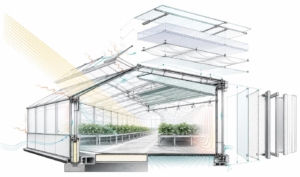
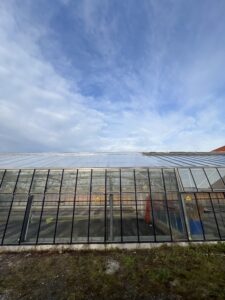
Glazing. Materials like ETFE film are drawing growing interest for their light transmission and durability compared to traditional glass or polycarbonate. When light transmission or UV exposure is part of what’s being studied, the glazing itself becomes part of the experimental design.
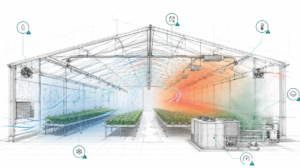
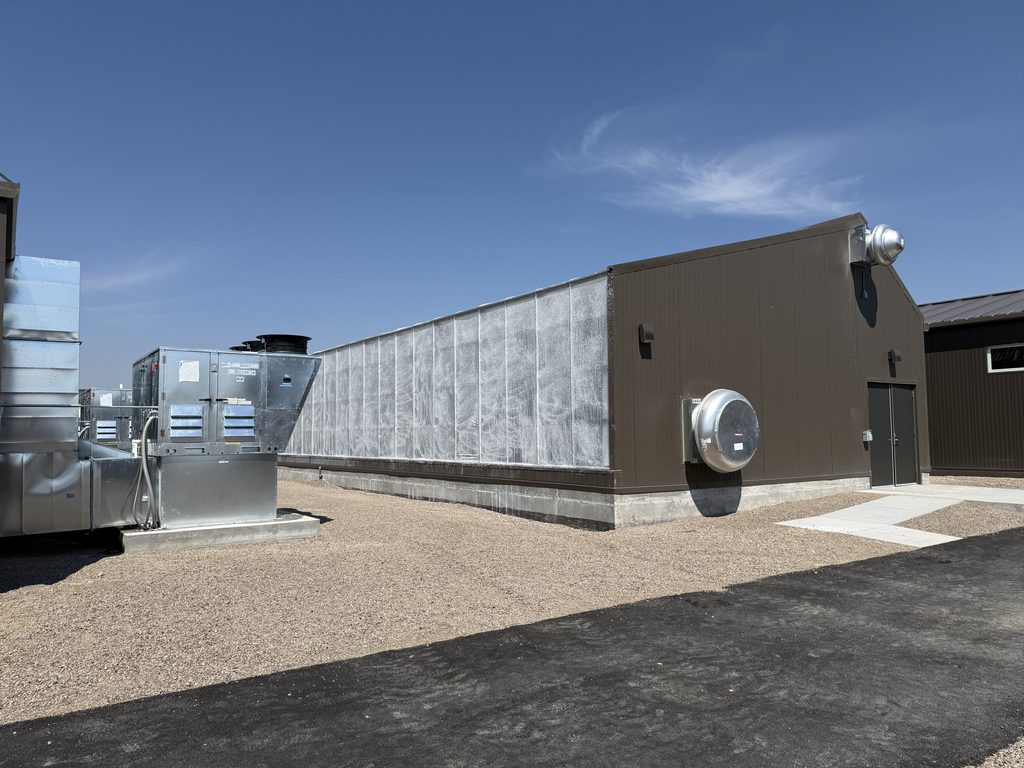
Climate systems. Precision is especially critical in a research setting. Research greenhouses often move toward fully sealed environments paired with high-efficiency HVACD systems, giving researchers tight, repeatable control over conditions. A passively vented greenhouse might keep plants alive just fine, but it won’t produce the kind of consistent, defensible data a research program depends on.
Built for Industry Partnership
Many university research greenhouses are built with outside industry partnerships in mind as much as academic use. Agricultural companies frequently work alongside university researchers to trial new crop varieties, test performance across simulated climate zones, or validate techniques before scaling them commercially.
That kind of collaboration adds another layer to the design brief. A greenhouse supporting an active industry partnership needs to flex around shifting experimental protocols, run multiple concurrent studies, and hold up under the kind of scrutiny that comes with producing data other organizations will rely on. It needs to function as R&D infrastructure, not simply growing space.
How Does Ceres Design University Research Greenhouses?
Rather than starting from a standard greenhouse layout, we build university research facilities around the questions our clients are actually trying to answer. That means:
- Precision climate engineering, so each grow zone performs to the tolerances a research program requires
- Custom HVACD design and systems integration, for precise environmental control and to meet the growing goals of the institution
- Glazing consultation, including emerging materials like ETFE, matched to the light and durability needs of the research itself
- Energy modeling before design decisions are locked in, so climate control is engineered around real performance data
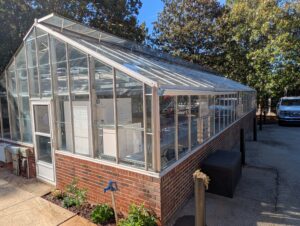
The result is a greenhouse that’s flexible enough to support multiple studies and partners, and precise enough to hold up to peer review. Our Catawba College Greenhouse Retrofit is one example of this approach applied to a university setting.
Why Do Research Greenhouses Need a Different Design Process?
Research greenhouses aren’t simply a bigger or more elaborate version of a teaching greenhouse. They’re a different category, with different priorities from day one: tighter climate control and more robust technology, built around the reality that the data has to hold up.
If your institution is planning a new research greenhouse, or evaluating whether an existing one still meets your program’s needs, the earlier these decisions enter the conversation, the better the outcome.
Contact our team to talk through your university’s research greenhouse project.