Client: Catawba College
Location: Salisbury, North Carolina
Project Type: Consultation
Industry: Education
Technologies: SunSense™ automation, energy curtains, fogging system, dehumidification, exhaust fans & intake dampers, HAF fans, shade cloth system
Project Overview
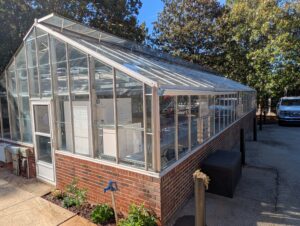
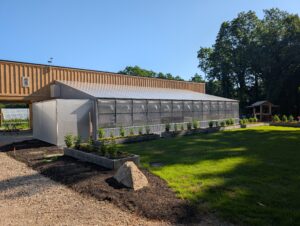
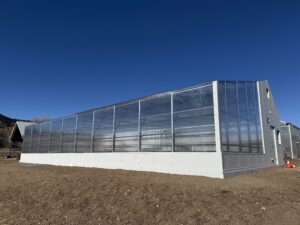
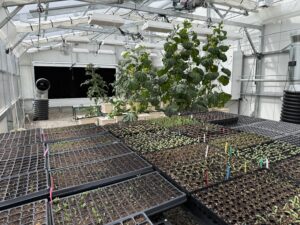
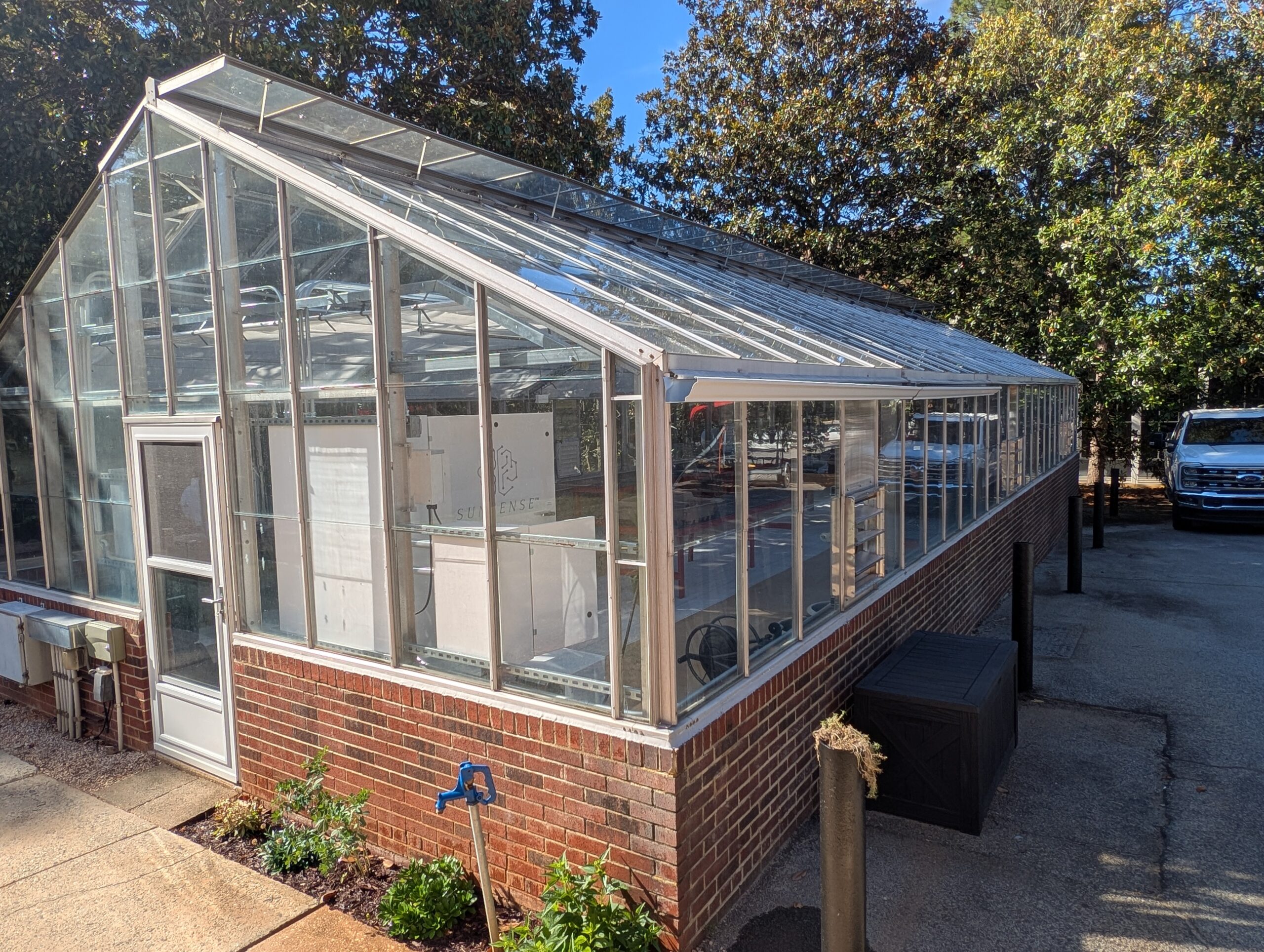
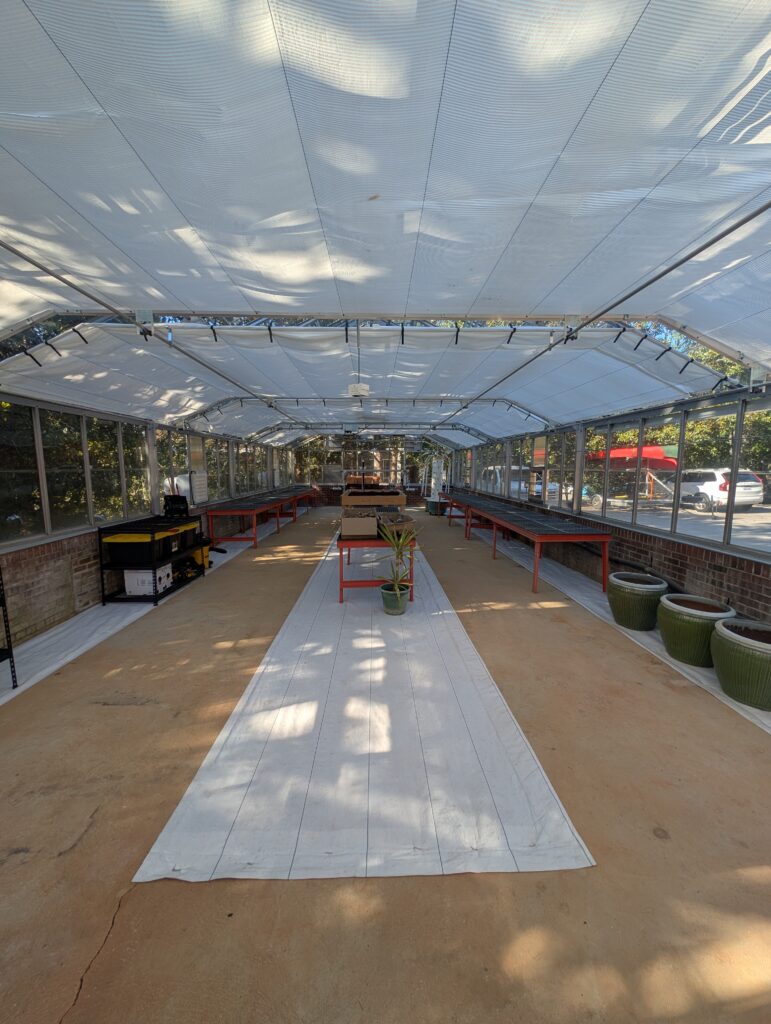
Catawba College’s 1,000-square-foot greenhouse is a hub for the school’s science department, supporting urban agriculture, botany, and horticulture programs alike. But for years, the facility could only be used part of the year. Built with heating but no real way to manage heat, the greenhouse ran well through fall and winter but became unusable once summer temperatures climbed.
When the college’s Center for the Environment brought on Isaac Haut, an MBA student, as project coordinator for a greenhouse retrofit, he was pointed to Ceres Greenhouse Solutions as a consulting partner.
The Challenge
Catawba’s initial instinct was that the single-pane glass glazing needed to be replaced to help with environmental control. Ceres took a closer look and reached a different conclusion: the glazing itself wasn’t the issue. The greenhouse simply had no way to manage heat once it built up, no cooling systems, no airflow strategy, and no way to shed excess humidity.
The Ceres Approach
Rather than a full glazing replacement, Ceres designed a retrofit built around active and passive cooling working together:
- Exhaust fans and intake dampers to establish real airflow through the space
- A microcooling (fogging) system to bring down temperatures during peak heat
- A dehumidifier to manage moisture alongside the added airflow
- A shade cloth system to cut solar heat gain passively, without sacrificing the existing glazing
- Two HAF (horizontal airflow) fans to keep air circulating evenly throughout the growing space
- A SunSense™ controller tying every system together, so the greenhouse now runs autonomously, adjusting itself in response to conditions rather than requiring manual intervention
The Results
The difference was immediate. Even the passive elements of the retrofit, like the shade cloth, made a noticeable impact on comfort inside the greenhouse. Combined with active cooling and dehumidification, the space now stays usable and comfortable well beyond the fall-to-winter window it was previously limited to, giving Catawba’s science, urban ag, botany, and horticulture programs a facility they can rely on year-round.
Why It Matters
Not every greenhouse problem calls for the most expensive fix. By diagnosing the retrofit as an airflow and heat-management issue rather than a glazing problem, Ceres helped Catawba College get a fully functional, four-season greenhouse without an unnecessary structural overhaul.
What was it like working with Ceres?

Isaac Haut, Project Manager of Catawba College retrofit
“My experience working with Ceres has been great. I had no prior knowledge of greenhouse systems going in, but after working with their team of experts, I came away feeling well informed and confident on the subject. Ceres was helpful and responsive to every request. I highly recommend their work! Thank you, Ceres Greenhouse Solutions!”
Looking to extend the usability of an existing greenhouse without a full rebuild? Contact Ceres Greenhouse Solutions to start the conversation.
Interested in educational greenhouses? Learn more here
Is greenhouse consulting right for you? Explore our options