Federal funding for greenhouse projects in the United States comes primarily through the U.S. Department of Agriculture (USDA), with additional support available through the Small Business Administration (SBA), the U.S. Treasury, and state programs that distribute federal funds. Few of these programs name greenhouses or indoor agriculture as a funding priority. Most successful applications present the greenhouse as a way to deliver the outcomes a program is designed to fund, such as energy savings, local food access, or research capacity.
This guide outlines the federal programs most relevant to greenhouse and controlled environment agriculture (CEA) projects, what each one funds, and how to frame an application around its priorities. For loans, utility rebates, and local funding sources, see our Greenhouse Financing Guide.
Program information in this article reflects official sources as of October 2026. Funding levels, eligibility rules, and deadlines change from year to year, so confirm current details on each program’s official website before applying.
Are There Federal Grants Specifically For Greenhouses?
A small number of federal programs focus on indoor and urban agriculture, including USDA’s Urban, Indoor, and other Emerging Agricultural Production (UIE) initiative and its Urban Agriculture and Innovative Production (UAIP) grants. Most other federal programs fund outcomes rather than building types. A greenhouse is eligible when it is the means of reaching the outcome the program funds.
In practice, this means matching the project to the program’s stated goals:
- Energy programs fund measurable reductions in energy use or new renewable energy generation. An application would document how the greenhouse design, heating and cooling systems, or controls reduce energy consumption.
- Local food and market programs fund connections between producers and local buyers. An application would describe how year-round greenhouse production supplies farmers markets, institutions, or regional distributors closer to where the food is consumed.
- Beginning or small-scale producer programs fund farm viability. An application might describe how a greenhouse supports consistent, year-round production on a smaller land base than field production requires.
- Research and education programs fund new knowledge and training. An application would describe the research questions or curriculum the facility supports.
The same greenhouse can fit more than one program, depending on which outcome the application emphasizes.
Which USDA Programs Can Support a Greenhouse Project?
Five USDA programs are most relevant to greenhouse projects. Each is administered by a different USDA agency and funds a different type of outcome.
| Program | USDA agency | What it funds | Status as of October 2026 |
|---|---|---|---|
| Rural Energy for America Program (REAP) | Rural Development | Energy-efficiency improvements and renewable energy systems | New rule effective October 16, 2026; next application window not yet announced |
| Urban, Indoor, and Emerging Agriculture (UIE) | National Institute of Food and Agriculture (NIFA) | Research, education, and extension for urban and indoor production | FY 2026 deadline was July 27, 2026 |
| Urban Agriculture and Innovative Production (UAIP) | Office of Urban Agriculture and Innovative Production (within NRCS) | Planning and implementation projects for urban and innovative agriculture | Future funding rounds uncertain |
| Local Agriculture Market Program (LAMP) | Agricultural Marketing Service (AMS) | Local and regional food markets and supply chains | FY 2026 applications closed June 5, 2026 |
| EQIP High Tunnel System | Natural Resources Conservation Service (NRCS) | Seasonal high tunnels (not greenhouses) | Offered through state NRCS offices |
Rural Energy for America Program (REAP)
REAP provides grants and guaranteed loans to agricultural producers and rural small businesses for renewable energy systems and energy-efficiency improvements. For greenhouse operators, eligible improvements can include more efficient heating and cooling equipment, environmental controls, and renewable energy systems, depending on the project and the current program notice.
USDA published a final rule on October 1, 2026 that changes how REAP works. Under the new rule, effective October 16, 2026, projects must be fully built and operating before the applicant applies. Applicants submit 12 months of actual energy production or savings data along with 12 months of pre-installation data. USDA will announce application windows, available funding, and scoring priorities in annual program notices. The rule is open for public comment until November 2, 2026.
Because REAP now rewards verified results, metering and data collection should be planned into the project from the design stage. Energy modeling during design establishes the expected performance that installed systems are later measured against. Our article on greenhouse simulation and energy modeling explains how that analysis works, and Sustainability, Electrification, and Utility Incentives in Greenhouse Design covers how modeling supports incentive applications.
Urban, Indoor, and other Emerging Agricultural Production Research, Education, and Extension Initiative (UIE)
UIE is a NIFA competitive grant program that funds research, education, and extension work on urban, indoor, and emerging production systems. The FY 2026 funding opportunity offered $4 million in total funding, with individual awards from $50,000 to $500,000 and an application deadline of July 27, 2026. Its FY 2026 priority focus included production in indoor and controlled-environment systems.
Eligible applicants include universities, research institutions, private organizations and corporations, and individuals. Applicants must include local community organizations on the project team. UIE is most relevant to research and educational greenhouse projects. For design considerations specific to academic facilities, see Designing Greenhouses for Academic Research.
Urban Agriculture and Innovative Production (UAIP) Grants
UAIP grants support planning and implementation projects for urban agriculture and innovative production, with the goal of improving access to local food where fresh food is limited. The program is run by USDA’s Office of Urban Agriculture and Innovative Production, which is housed within NRCS. The most recent announced round, in January 2025, made $2.5 million available for UAIP grants.
The program’s future is uncertain. The National Sustainable Agriculture Coalition reported in October 2026 that $12 million in congressionally mandated funding for the office had been withheld, while farm bill proposals in both chambers would expand its role. Urban and community greenhouse projects should monitor the program but not plan around a specific funding round. Learn more about community and urban greenhouses.
Local Agriculture Market Program (LAMP)
LAMP funds projects that develop local and regional food markets. It includes three grant programs: the Farmers Market Promotion Program (FMPP), the Local Food Promotion Program (LFPP), and Regional Food System Partnerships (RFSP). In April 2026, USDA announced $32.4 million in LAMP funding, with applications due June 5, 2026. LAMP requires a 25 percent cost share.
LAMP is a fit for greenhouse operations that supply direct-to-consumer markets, local food businesses, or institutional buyers such as schools and hospitals. Applications focus on the market connection the greenhouse enables, rather than on the structure itself.
EQIP High Tunnel System
NRCS offers financial assistance for seasonal high tunnels through the Environmental Quality Incentives Program (EQIP). This program funds high tunnels, not greenhouses. NRCS’s practice standard does not include greenhouses, and crops must be grown in the ground rather than in pots, on benches, or hydroponically. High tunnels must be purchased as manufactured kits. EQIP is a useful option for season extension on field-crop land, but it does not apply to heated, climate-controlled greenhouse facilities.
Other USDA loan and grant programs
USDA Rural Development and the Farm Service Agency (FSA) also offer loan and grant programs for rural businesses and agricultural producers. These are outlined in our Greenhouse Financing Guide.
What Federal Funding is Available Outside USDA?
Outside USDA, federal support for greenhouse projects is mainly financing rather than grants, and much of it is delivered through state and local programs.
- Small Business Administration (SBA). SBA loan programs can finance greenhouse businesses, including construction and equipment. SBA’s Lender Match tool connects small businesses with participating lenders.
- State Small Business Credit Initiative (SSBCI). SSBCI is a U.S. Treasury program that provides federal funds to state small business financing programs, such as loan participation and collateral support. Availability and terms are set by each state.
- Commercial Property Assessed Clean Energy (C-PACE). C-PACE programs are created under state law and administered at the state or local level. They finance energy-efficiency and renewable energy improvements to commercial properties, with repayment through a property assessment. Availability depends on the state and county where the project is located.
- Community Development Block Grants (CDBG). This U.S. Department of Housing and Urban Development (HUD) program provides funds to state and local governments, which set their own local priorities. Community and nonprofit greenhouse projects may qualify where food access or economic development is a local priority.
For these programs, the first contact is usually a state economic development agency, a local government office, or a participating lender rather than the federal agency itself.
How Do You Prepare a Federal Funding Application For a Greenhouse?
A strong application connects the greenhouse to the program’s priorities with specific, documented information. The following steps apply to most federal programs:
- Read the funding notice in full. Each program publishes a Notice of Funding Opportunity (NOFO) or program notice that defines eligible applicants, eligible costs, scoring criteria, and cost-share requirements.
- Identify the outcome the greenhouse delivers. Match the project to the program’s stated priority, such as energy savings, local market access, or research capacity.
- Gather project documentation. Energy modeling results, system specifications, production plans, and cost estimates give reviewers concrete information to evaluate.
- Confirm cost-share and timing requirements. Many programs require matching funds, and some, such as REAP, now require that the project already be complete.
- Register early. Federal applications generally require a SAM.gov registration and a Grants.gov account, which can take several weeks to set up.
Where Can You Get Help Writing a Grant Application?
NIFA offers grant training and technical assistance events to help applicants understand funding opportunities and the application process. State extension offices and local USDA service centers can also advise on program eligibility.
Ceres does not research, write, or submit grant applications on behalf of clients. We share resources and can introduce clients to grant support partners who specialize in funding assistance.
How Does Ceres Support Funded Greenhouse Projects?
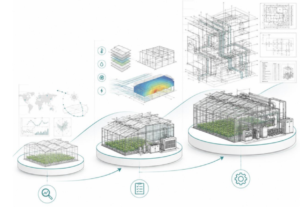
Ceres provides the design information that funding applications often require. This includes energy modeling that projects annual heating, cooling, and electrical loads, and design documentation for new construction or retrofits.
For quarterly updates on grant opportunities and USDA program changes, subscribe to the Ceres financing newsletter.
Speak with a Ceres engineer about your project or read the Greenhouse Financing Guide.