A GACP-compliant greenhouse is a growing facility designed so that every condition affecting the quality of a medicinal plant can be controlled, recorded, and traced back to a specific batch. The European Medicines Agency’s revised Good Agricultural and Collection Practice (GACP) guideline, adopted in July 2025, now spells out what that means for greenhouse and indoor cultivation. For research teams growing herbal starting materials for botanical drug discovery, most of those requirements are design decisions, and they are far easier to meet when they are built in from the first drawing.
What is GACP, and Why Does it Apply to Greenhouses?
GACP is the quality standard for growing and collecting the plants that become herbal medicines and botanical drugs. The World Health Organization published its GACP guidelines for medicinal plants in 2003, and the EMA’s Committee on Herbal Medicinal Products issued the European version in 2006. Both cover the earliest link in the supply chain: cultivation, wild collection, harvest, and primary processing of the plant material that later becomes an active ingredient.
In a botanical drug discovery pipeline, three quality frameworks apply at different stages:
| Framework | Stage it governs | What it protects |
| GACP (Good Agricultural and Collection Practice) | Cultivation, harvest, and primary processing | Consistent, traceable plant starting material |
| GLP (Good Laboratory Practice) | Nonclinical laboratory and safety studies | The integrity of study data submitted to regulators |
| GMP (Good Manufacturing Practice) | Processing, extraction, and drug manufacture | The quality of the finished medicinal product |
The greenhouse sits squarely in GACP territory. In July 2025, the EMA adopted Revision 1 of its GACP guideline, the first major update since 2006. The revision adds a dedicated annex (Annex 1) for indoor and greenhouse cultivation. It defines indoor cultivation as a closed environment with artificial light and air filtration, and greenhouses as semi-controlled environments that may be open to outside air. Both now carry specific expectations for environmental control, monitoring, and documentation (EMA, GACP Guideline Rev. 1).
GACP also shapes botanical drug development in the United States. The FDA’s Botanical Drug Development guidance (2016) states that applicants “should establish GACP and summarize the related procedures for each of the botanical raw materials,” and points to the WHO guidelines as its reference. For the U.S. herbal products industry, the American Herbal Products Association (AHPA) publishes its own Guidance on Good Agricultural and Collection Practices and Good Manufacturing Practices for Botanical Materials, a voluntary framework most recently revised in 2023. Ceres Greenhouse Solutions is a member of AHPA.
What Does GACP Require of a Growing Environment?
The revised guideline asks that indoor and greenhouse facilities control the growing environment, record it continuously, and tie every batch of plant material back to its inputs. The requirements fall into four groups.
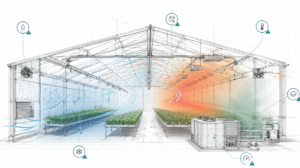
Environmental control systems. Annex 1 calls for systems covering air, climate and humidity control, light, water treatment, ventilation, and air filtration. Facilities should also limit personnel access, minimize potential contamination, and use surfaces that are easy to clean and impermeable to cleaning and disinfecting agents.
Documentation of agronomic conditions. Growing conditions and every quality-relevant material used during cultivation (seed, substrate, fertilizer, water treatment, crop protection) must be documented. The guideline expects growers to identify critical quality attributes (CQAs) and critical process parameters. CQAs are the measurable properties of the harvested plant material that determine its quality, such as correct species identity, active compound content, moisture, and freedom from contaminants, each with a defined acceptable range. Critical process parameters are the growing conditions, such as temperature, humidity, and light, that influence those attributes. Growers then set acceptance criteria for each batch and keep daily digital records of those parameters that are reviewed. Equipment should be calibrated, and critical equipment and supporting systems should be qualified.
Traceability. Each batch must be traceable to its source, from seed or cutting through harvest. Cultivated and wild-collected material receive separate batch numbers, and cleaning activities are logged in batch records.
Personnel training. Staff working in controlled-climate cultivation need training in handling plants under those conditions, and activities such as eating are restricted to separate designated areas.
Source: EMA, GACP Guideline Rev. 1, Annex 1
How Do GACP Requirements Translate Into Greenhouse Design Decisions?
GACP describes outcomes, and the greenhouse design determines whether those outcomes are achievable day to day. Four design choices carry most of the weight.
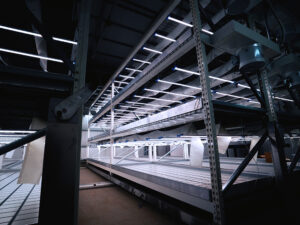
Independent zone control for each crop’s CQAs. Medicinal species often need different temperature, humidity, and light regimes, and a single shared climate forces compromises that show up as batch-to-batch variation. Designing the facility as independently controlled zones lets each crop’s critical process parameters be set and held to its own targets. Zoning also makes it practical to assign designated areas to different cultivation stages, as Annex 1 allows.
Sensor placement and data capture planned at the design stage. Daily digital records of critical parameters depend on where sensors sit, how many there are, and how their data is stored and exported. When sensor layout, controller integration, and data export are specified alongside the HVAC and lighting design, the record a quality reviewer needs comes directly from the control system. Sensors added after construction tend to measure where it was convenient to mount them, which may not reflect conditions at the plant canopy. Calibration access and equipment qualification are also simpler to plan before walls and benches are in place.
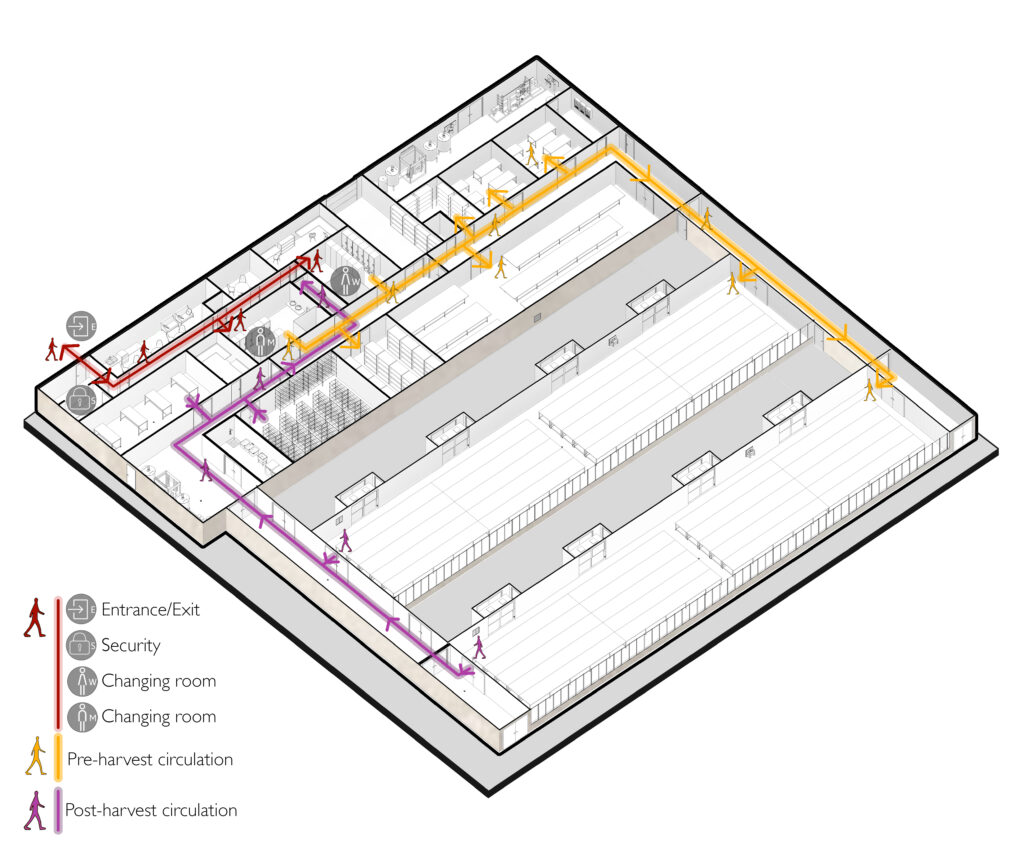
Surfaces, drainage, and layout for contamination control. The guideline asks for surfaces that are easy to clean and impermeable to cleaning agents. In practice, that shapes choices about floor finishes, bench materials, drainage slopes, and wall and curb details. Layout decisions such as controlled entry points, separation of clean and soiled workflows, and a defined place for staff breaks support the access and contamination requirements without extra procedures.
Overlap with a well-built research greenhouse. Many GACP expectations match what any research facility already needs: precise and repeatable conditions, reliable data, and biosecurity features such as insect exclusion. Our guide to research greenhouse design covers those fundamentals, including structural layout, glazing, and automation. GACP adds a documentation and traceability layer on top of that foundation, so the incremental design effort is mostly in data capture, materials, and workflow.
Where Does GACP End and GMP Begin?
For most projects, GACP covers the greenhouse and GMP picks up once harvested material moves into processing and manufacture. The EMA guideline does not set one fixed line for every product. It states that requirements become stricter the closer a preparation is to the final product, and that post-harvest steps such as drying and cutting may need to follow EU GMP Part I or Part II depending on the finished product (EMA, GACP Guideline Rev. 1, Section 12). Where exactly the handoff falls should be confirmed with the sponsor’s quality and regulatory team early in planning.
That distinction matters for budget and scope. A greenhouse designed to GACP needs controlled, documented, traceable cultivation. It generally does not need the cleanroom classifications, full validation programs, and manufacturing controls that GMP processing areas require. Defining the boundary up front keeps the cultivation facility sized to what it has to do, and lets any GMP post-harvest space be planned as its own scope, either on site or with a processing partner.
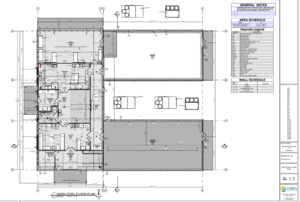
Many programs need both in one building: GACP cultivation space alongside GMP post-harvest processing such as drying, extraction, or packaging. Ceres is often asked to design facilities that combine the two. In a shared building, the layout has to keep each zone distinct, with defined boundaries, separate material and personnel flows, and finishes and environmental controls matched to the rules that apply to each room. Planning those rooms and the transitions between them at the design stage avoids retrofitting cultivation space to GMP standards later, and keeps the scope and cost of each area tied to what it has to do.
What Does Precise, Documented Environmental Control Look Like in Practice?
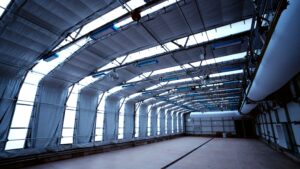
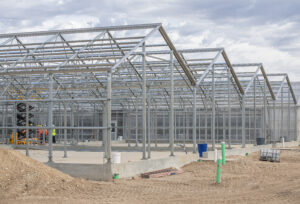
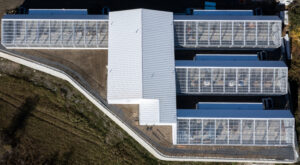
The KWS Sugarbeet Research Greenhouse in Kimberly, Idaho, shows the same engineering discipline GACP calls for, applied to plant breeding research. It is not a GACP project, but it was built around the capabilities the guideline asks for: independently controlled zones, held set points, and centralized monitoring.
Ceres provided design, engineering, and equipment for the facility, with Starr Corporation as general contractor. The complex includes:
- Four independent plant zones, each with its own temperature and humidity set points
- A vernalization chamber that lets researchers induce flowering on a repeatable schedule
- The SunSense™ controller, which uses real-time environmental data to maintain conditions automatically
- A single dashboard for managing and monitoring all zones
- Heat pump technology and energy curtains to manage operating energy
- ETFE glazing, which provides high light transmittance and passes the full light spectrum, supporting faster plant growth and helping with disease and pest control
“A key focus of the project was achieving precision climate control for both seedling production and testing,” said Chris Uhlig, CEO of Ceres Greenhouse Solutions. For a medicinal plant program, those same capabilities support per-crop control of critical process parameters and a continuous environmental record for each batch.
Planning a Research or Botanical Cultivation Facility?
Ceres designs and builds research greenhouses with zone-level climate control, integrated monitoring, and layouts planned around how your team works. If you are scoping a facility for medicinal or botanical plant research, speak with a greenhouse expert about your crops, documentation needs, and where your GACP and GMP boundaries fall.
Sources
- EMA, Guideline on Good Agricultural and Collection Practice (GACP) for starting materials of herbal origin, Rev. 1
- World Health Organization, WHO guidelines on good agricultural and collection practices (GACP) for medicinal plants
- U.S. FDA, Botanical Drug Development: Guidance for Industry
- American Herbal Products Association, Good Agricultural and Collection Practices
- Ceres Greenhouse Solutions, KWS Sugarbeet Research Greenhouse
- Ceres Greenhouse Solutions, Research Greenhouse Design: Key Considerations for Agricultural R&D