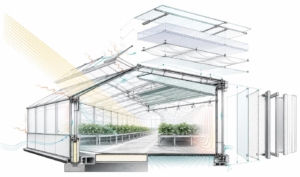
Why Putting the “Build First” is Risky
Feasibility – the state or degree of being easily or conveniently done.
At first glance, building a greenhouse can seem straightforward. You can purchase a kit, assemble it, and by definition, it was “feasible.” Success! It was built easily and conveniently.
Then winter comes. Then summer. Suddenly, it’s too cold… or too hot… and the plants die. So yes, it was “conveniently done,” but was it truly feasible? If the greenhouse can’t support your operation, it becomes either a loss or a project that requires additional investment to fix.
With larger, more expensive projects, there is often pressure to cut costs early. Contractors may offer low-cost solutions to win the work, but those solutions don’t always meet the long-term needs of the business.
At the start of any design process, the most important question is: will this design meet my expectations for operational efficiency and production? Keeping that question front and center helps ensure the facility performs as intended—not just on day one, but for years to come
Key Takeaways from this Article:
- A greenhouse that is easy to build is not necessarily one that will operate successfully.
- Real feasibility includes long-term performance, not just whether construction is possible.
- Early consulting helps identify and avoid costly design and operational mistakes.
- A feasibility-first approach keeps design decisions aligned with business goals.
- Consulting evaluates specific systems, while Schematic Design coordinates the entire facility.
- Investing more in planning upfront typically reduces long-term costs and improves performance.
What is Greenhouse Consulting?
Traditional greenhouse manufacturers are often able to deliver standard structures efficiently, built to a client’s desired specs with basic climate equipment. While this approach can work well for some straightforward projects, it may overlook details that influence how a greenhouse performs once construction is complete and cultivation begins. Decisions made during design about climate control, airflow, crop systems, and facility layout can have significant long-term impacts on plant health, energy use, and operational costs years after the construction is complete.
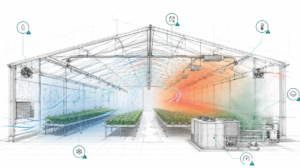
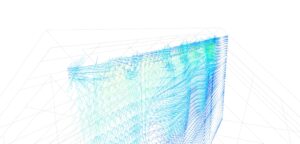
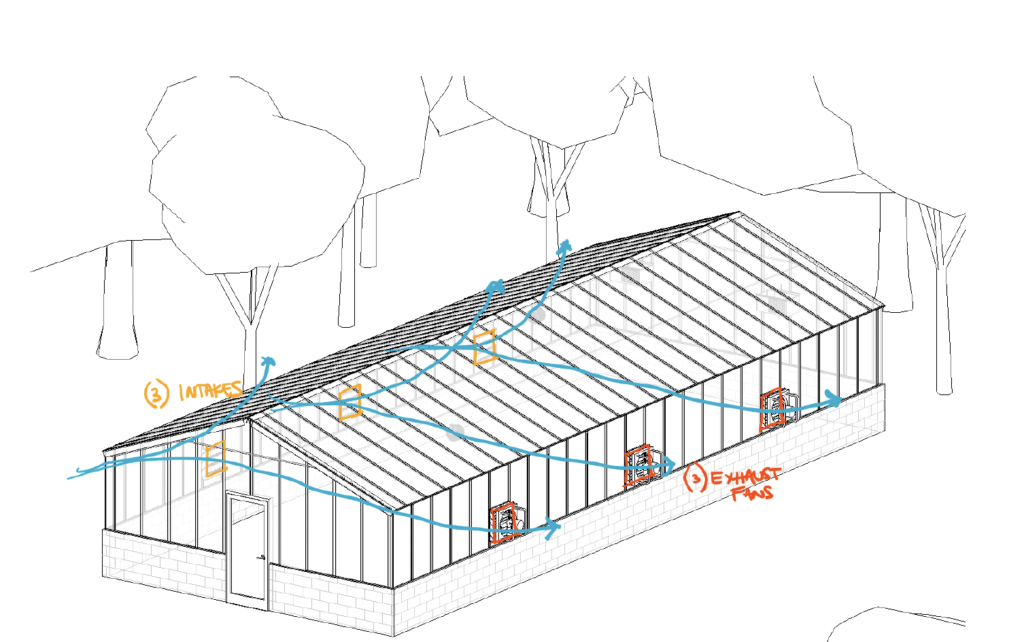
Greenhouse consulting focuses on evaluating specific considerations during the planning and design stages of a project. A good consultant will review proposed greenhouse designs and assess whether the facility will support the grower’s production goals, environmental targets, and operational needs. This often involves modeling how a greenhouse will perform under different climate conditions and identifying opportunities to improve system design before construction begins.
Some clients already have a preferred greenhouse supplier, but want help making sure the proposed structure can meet their goals. In these scenarios, a consulting contract can often be very helpful. A consultant may look at the proposed structure, model it, and then offer suggestions or further design services. For example, growers commonly ask for help with adjustments to systems such as heating, cooling, or ventilation to keep the facility within the desired setpoints of the operator.
Consulting projects often begin with a defined scope, such as reviewing climate systems or evaluating a structural design. As planning progresses, additional factors often emerge that influence facility performance, which can lead to an expanded or altered scope.
Greenhouse consulting can include analysis and recommendations in areas such as:
- Facility modeling
- HVAC + D (dehumidification) design based on client setpoints for vented and sealed environments
- Glazing review and recommendations
- Controls review and recommendations
- Headhouse design review, which includes personnel and plant movement within the facilities, operational strategies to minimize pest and pathogen spread, and processing space and systems.
- Grow lighting layouts
- Grow system review and recommendations
- Irrigation/Fertigation review and recommendations
- Operational costs forecasting
Consultants typically work with the client and other subcontractors to gather the information needed for analysis and design recommendations. Because consulting often focuses on specific components of a project rather than the entire build, coordination between all project stakeholders is essential to ensure the final facility performs as intended.
Schematic Design: A Step Above Greenhouse Consulting
Some projects may require a deeper level of planning than what is typically covered in a consulting contract. This is where a schematic design can play an important role.
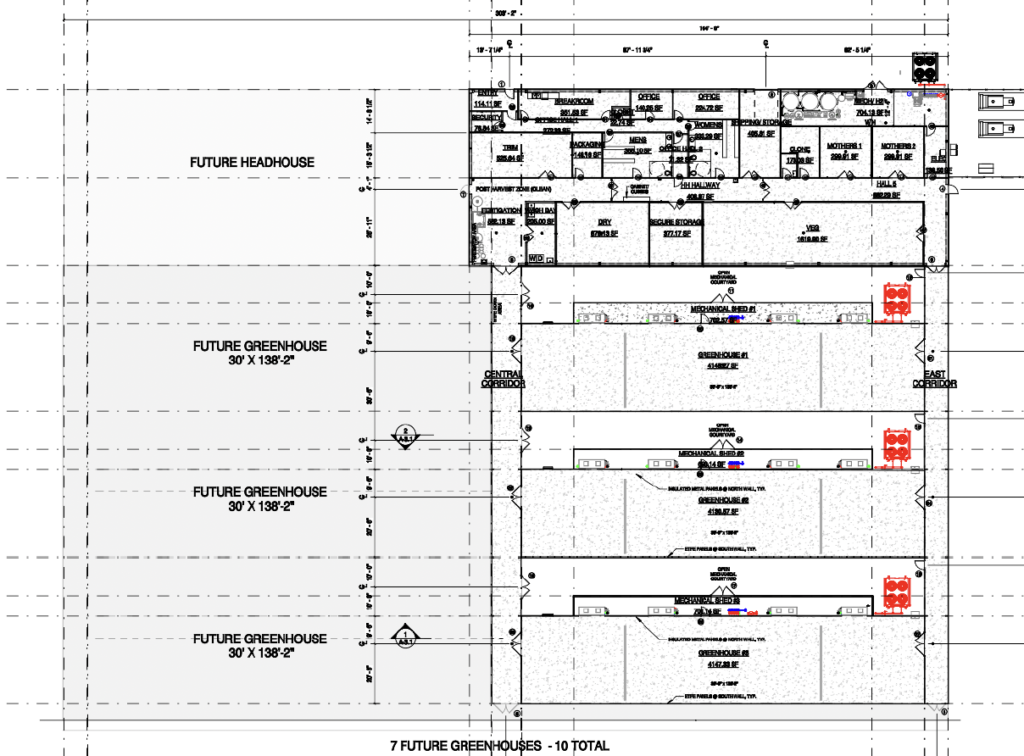
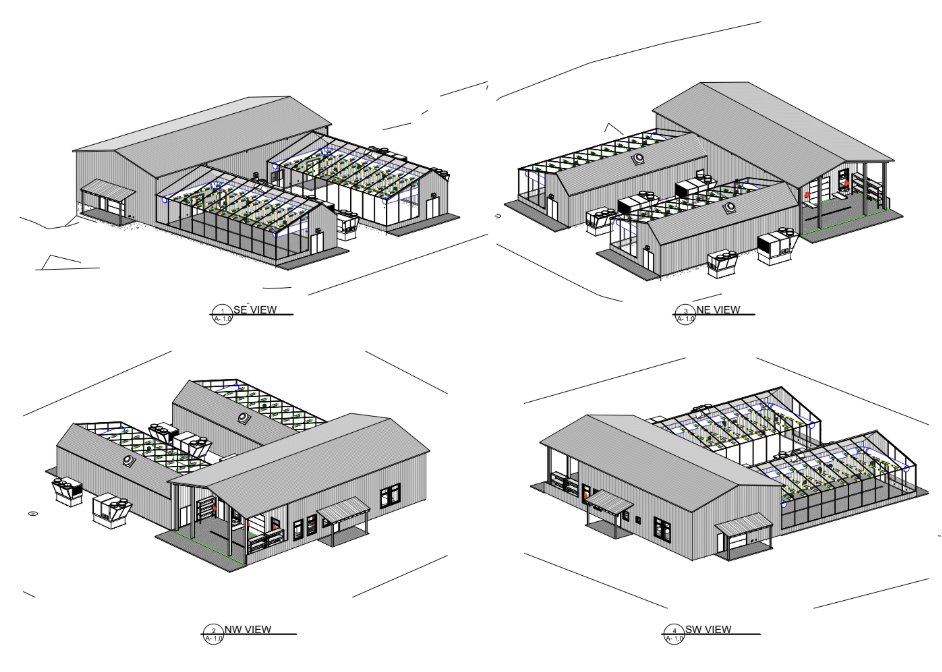
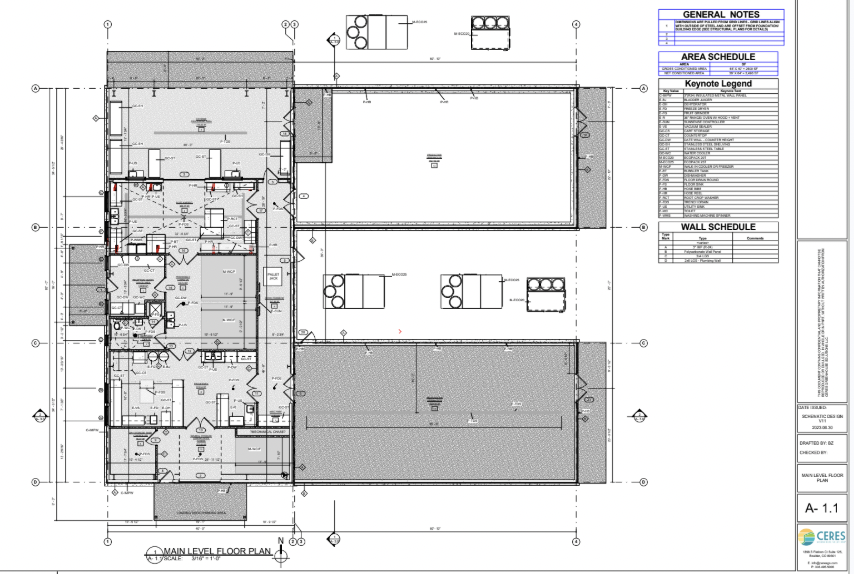
At Ceres, the Schematic Design (SD) contract details how Ceres manages the design of the project, including civil, structural, and MEP engineering along with all of the other design services listed above. This approach allows us to understand and design a facility from the ground up, taking into account plant needs, production expectations, local environment, site location, etc, to ensure that the final design meets or exceeds the clients original expectations.
Unlike consulting engagements that focus on reviewing specific components of a project, a schematic design (SD) involves coordinating the whole facility design, including integrating site conditions, structural requirements, climate systems, and cultivation strategies.
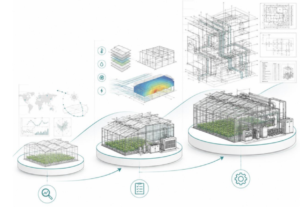
During the SD phase, architects, greenhouse specialists, engineers, and other specialists collaborate to develop a preliminary design for the facility. Working together, the project team can understand how different systems interact and identify potential challenges before the development of construction documents.
The scope of an SD includes:
- Site plan (is your site flat? Usually not)
- Civil engineering
- Foundation design
- Greenhouse selection
- Greenhouse foundation
- Glazing type
- Grow system selection
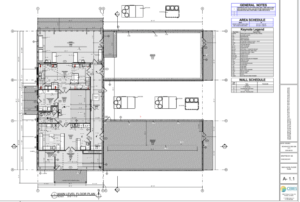
- Mechanical, Electrical, Plumbing engineered plans
- Permit drawings for permit submittal
- Equipment schedules
- Automation (where appropriate)
Another key purpose of the schematic design phase is to evaluate the feasibility of a proposed facility.
- What will this facility cost to purchase and build?
- How much will it cost to operate?
- How much labor will be required?
- How much product will it yield?
All of this work is necessary to begin to understand the economic and operational viability of a new design before moving into more detailed design and construction phases.
Feasibility-First Approach Explained
When designing a greenhouse facility, one of the primary objectives is ensuring that the final project aligns with the client’s operational and financial goals. To do this effectively, the design process often includes ongoing feasibility checks that evaluate whether the project still makes sense as plans evolve.
The following questions should continuously be asked:
- Is the project viable at the proposed scale?
- Does the market support the crop and volume?
- Do projected returns justify the investment?
These questions help guide major design decisions and ensure that the project remains aligned with the original goals. Changes to facility size, equipment selection, or environmental systems can affect both capital costs and operational performance.
For example, if financial projections suggest that a facility would take decades to recover its initial investment, the project may need to be reconsidered or even redesigned. With early analysis, adjustments can be made before construction begins.
Common Mistakes Made Without Early Consulting
Many greenhouse operators move forward with construction before completing a thorough design and planning process. In some cases, issues only become apparent after the facility is operational, when growers begin to encounter environmental or workflow challenges that are difficult and expensive to correct.
Some common issues we have encountered:
- Too hot in the greenhouse, not enough ventilation
- Desire to add addition outputs (lighting most often) but controller isn’t sized appropriately for any additional equipment
- High humidity leading to fungal/mildew outbreaks
- Disease spreading throughout entire facility
- Missing equipment needed for successful operation of facility
- High energy use
Here you can see how we deal with these issues during design/consulting:
- Problem: Too hot in the greenhouse due to insufficient ventilation
Solution: Environmental modeling
During early design work, the greenhouse environment can be modeled before materials are ordered or construction begins. This analysis helps determine whether adjustments are needed, such as selecting different glazing materials, adding shade systems, increasing airflow, or incorporating mechanical HVAC systems, in order to maintain the desired growing conditions.
- Problem: Environmental control systems that lack capacity for future equipment
Solution: Planning control systems for potential expansion
During design, the project team should discuss what they need to control now, as well as what they think they might want to add in the future. It is much cheaper to start with a slightly larger controller with open inputs/outputs than having to add modules to an existing controller.
- Problem: High humidity levels that contribute to fungal/mildew outbreaks
Solution: Managing humidity
An estimation of plant numbers in the greenhouse as well as watering rates needs to be conducted in order to calculate the amount of moisture in the air and the associated need for ventilation or mechanical dehumidification.
- Problem: Diseases spreading in the facility
Solution: Designing for biosecurity and operational flow
Facility layout can influence how pests and pathogens spread. At Ceres, we incorporate principles from Good Agricultural and Collection Practices (GACP) and Good Manufacturing Practices (GMP) to improve biosecurity. This may involve considering how plants, people, and materials move through the facility so that outbreaks can be isolated and managed more easily.
- Problem: Missing equipment or support spaces
Solution: Accounting for the full production workflow
Successful greenhouse operations often require more than just growing space. Planning may also include areas and equipment for activities such as propagation, transplanting, harvesting, cleaning, storage, and shipping.
Who Needs Greenhouse Consulting?
Now that we have discussed some of the benefits of consulting and why it can be worthwhile, the question that most often comes up is, do I need greenhouse consulting?
For the most part, we have found that some sort of consultation and design work before construction is helpful in almost all cases, from small residential projects to large commercial operations. In the end, both end users want their investment to be worthwhile and they want their facilities to meet their goals once complete.
Some common instances where consulting is helpful include:
- First time greenhouse investors or operators
- Growers expanding into new crops or markets
- New construction
- Groups looking for financing, grants or investor backing
There are a few instances where consulting is not needed, and we see that mostly during greenhouse expansion or addition. If a client already has a greenhouse that is meeting their needs, has appropriate mechanical systems and controls to hit the setpoints they need at the efficiency that works for them, then duplicating those systems on the same site can often be a much less design intensive process. Copy and paste can work in these situations, which is a great option as the entire process can happen much quicker and the operator already knows how the expansion will function.
Why Feasibility-First Thinking Leads to Better Long-Term Outcomes
As we have discussed, it is often a difficult decision to spend additional money in the early stages of a project for MORE design services, especially when sticking to a budget is a major factor in almost every build. But, as we have also discussed, that additional money spent for more robust design is almost always a major contributor to overall cost savings once the project is complete, and should create even more cost savings once the project is in operation for years to come.
If your greenhouse project is meant to meet specific performance goals, it’s worth investing a bit more time—and sometimes a little extra budget—to ensure it’s intentionally designed for your needs, rather than simply ending up with whatever results from minimal upfront planning.
Contact Ceres if you have any questions or wish to discuss your project with a sales member.