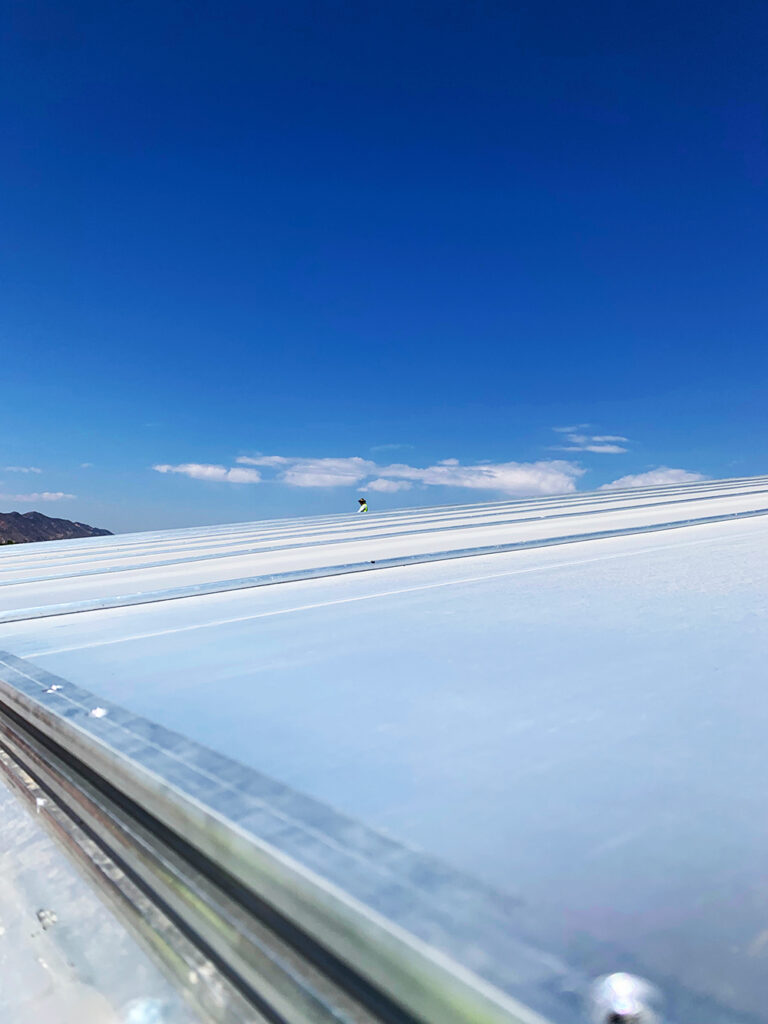
ETFE (ethylene tetrafluoroethylene) is a fluoropolymer film used as greenhouse glazing in single-layer and multi-layer systems. Compared with glass, polycarbonate, and polyethylene, it transmits a broader portion of the light spectrum, weighs less, and holds its light transmission longer under UV exposure.
Glazing affects light quality, heat loss, structural design, and maintenance for the life of a greenhouse. This guide covers how ETFE performs in each of those areas and the types of commercial, research, and retrofit projects where it fits.
What is ETFE Greenhouse Glazing?
ETFE is a fluoropolymer film originally developed for applications that required durability, chemical resistance, and long-term stability. It is now used in architectural building envelopes and agricultural structures.
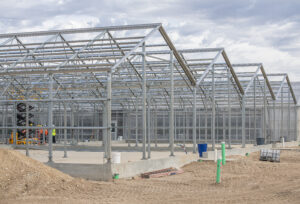
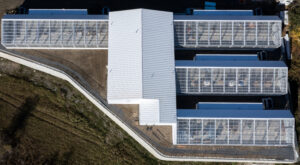
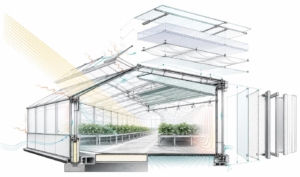
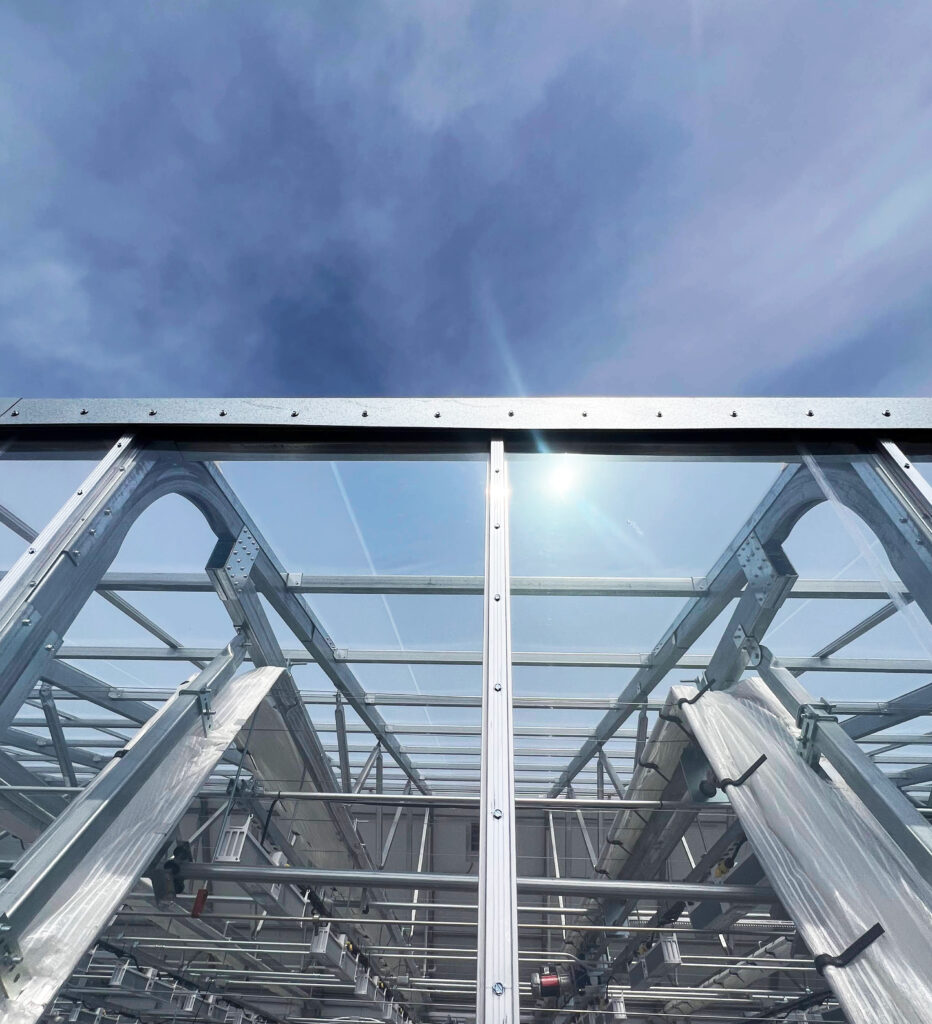
In greenhouses, ETFE is installed in one, two, or three layers. Multi-layer systems are inflated to form air-filled cushions, which add insulation and diffuse incoming light. Ceres installs ETFE on an engineered aluminum track system developed with its manufacturing partners.
ETFE film is available in two grades:
- Clear ETFE is used where visibility into or out of the greenhouse matters.
- Diffuse ETFE scatters incoming light across the canopy and reduces sharp shadows.
How much light does ETFE transmit?
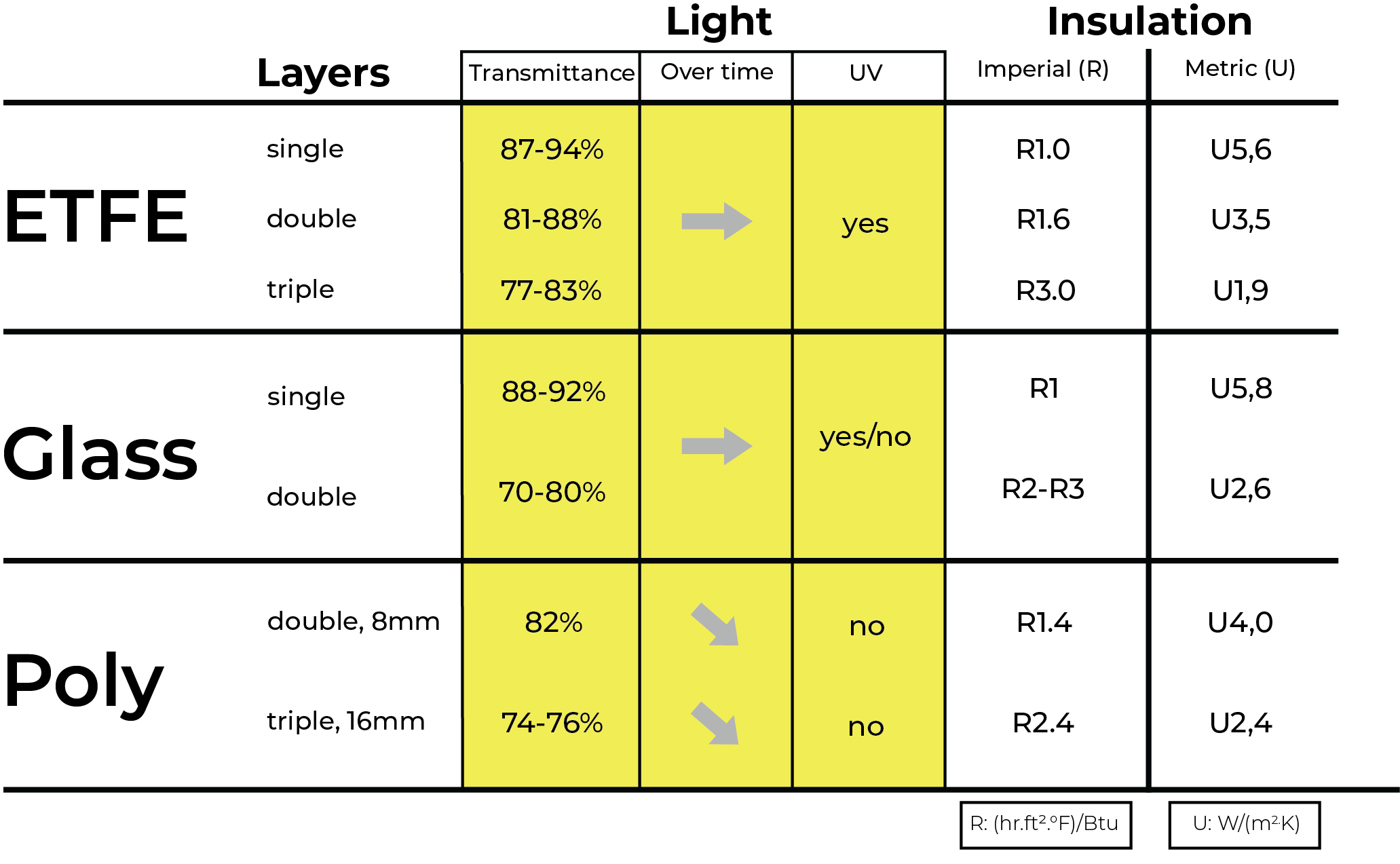
ETFE light transmission depends on film thickness. In Ceres’ product specifications, 100 µm film transmits 94% of available light and 250 µm film transmits 87%.
Thicker film carries higher hail, wind, and snow loads and allows wider spacing between support tracks. Wider spacing means less shading from the structure, which offsets part of the transmission difference between thicknesses.
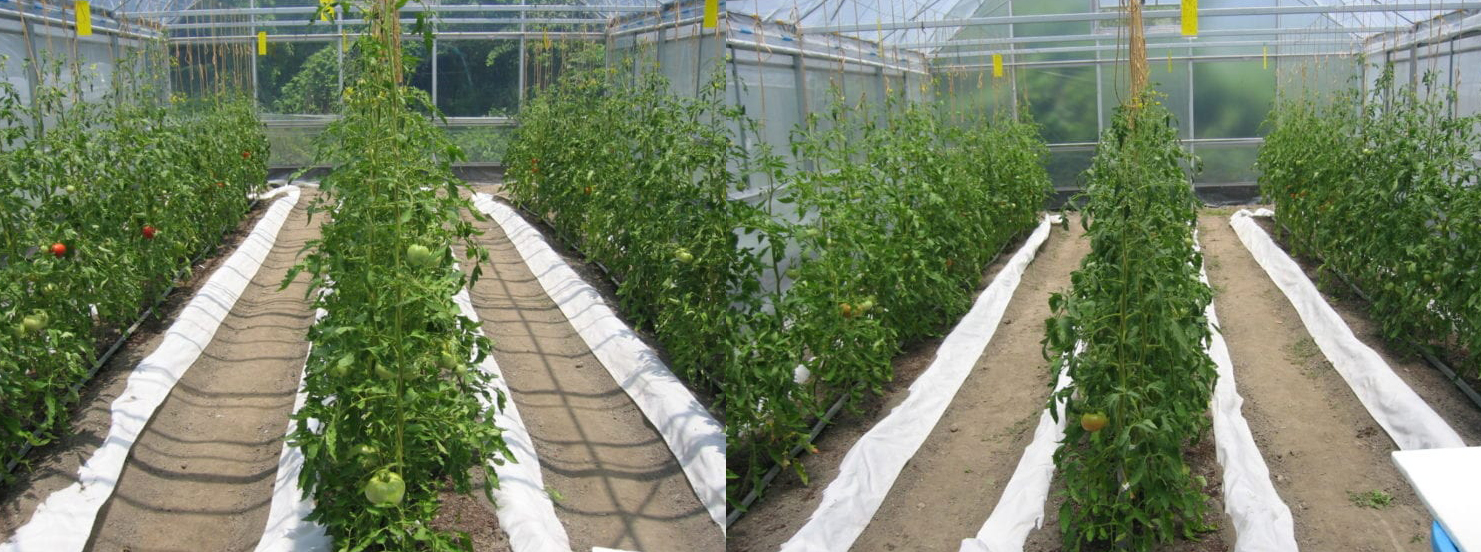
Diffuse ETFE distributes incoming light more evenly across the growing area. In larger greenhouses, this contributes to more consistent growth across the canopy. Ceres recorded spectrometer readings in operating ETFE and polycarbonate greenhouses in Measuring Light Transmission in a Commercial Greenhouse.
How does UV transmission through ETFE affect crops?
ETFE transmits a broader portion of the UV spectrum than glazing materials formulated with UV absorbers, such as most polyethylene films and polycarbonate. UV exposure influences plant morphology and, in some crops, pigmentation such as red leaf coloration. These effects vary by crop, cultivar, and growing conditions.
UV also affects insect behavior. Thrips, aphids, and whiteflies use UV light to orient, and field studies have recorded lower populations of these pests under UV-blocking films (Journal of Economic Entomology, 2002; Environmental Entomology, 2006). Pest management planning for a UV-transmitting greenhouse accounts for this through screening and integrated pest management.
How long does ETFE last in a greenhouse?
ETFE resists UV degradation, so it does not yellow or lose clarity the way many plastic glazing materials do after years of sun exposure. ETFE greenhouse installations from the early 1980s remain in operation, and the film carries a 10-year manufacturer warranty.
ETFE also resists the pesticides and cleaning agents used in regular greenhouse operation, which limits surface degradation from chemical exposure. It remains stable above 400°F (200°C), compared with temperature ratings of about 280°F (140°C) for polycarbonate and 200°F (90°C) for acrylic. ETFE is fire-rated ASTM E84 Class A.
How does ETFE handle hail, wind, and snow?
ETFE is strong and flexible. Under wind, snow, or impact loads, it stretches and redistributes stress rather than cracking, which reduces the risk of sudden glazing failure.
In lab testing, 250 µm ETFE film withstood 2-inch (50 mm) hail with indentation and no perforation. Indentations can usually be repaired with heat or ETFE repair tape.
ETFE is hydrophobic, so snow slides off roofs with an appropriate slope. The Ceres ETFE system is not recommended for flat roofs.
How does ETFE’s weight affect greenhouse structure and retrofits?
ETFE weighs a fraction of what glass weighs, which reduces the load on the greenhouse frame. In new construction, lighter glazing can simplify the structural system and reduce the steel and framing required.
Flexibility also allows large spans, curved forms, and cushion systems that are difficult to build with rigid glazing. These forms are common in Glass House Architecture and biophilic design projects.
For existing structures, lower weight expands the range of feasible upgrades. ETFE can be retrofitted onto gable, offset-gable, hoop house, Chinese-style, and custom greenhouses. Large Venlo greenhouses are difficult to retrofit unless they were designed for ETFE.
How much insulation does ETFE provide?
ETFE insulation comes from the air held between layers. A two-layer ETFE cushion has an R-value of about 1.8 ft²·°F·h/BTU (0.32 m²·K/W), and a third layer adds insulation and light diffusion. The number of layers for a project depends on the regional climate and the insulation required.
ETFE can also be installed over large areas without seams. Fewer joints between materials reduce air leakage through the greenhouse envelope.
Glazing is one part of greenhouse energy performance. Ceres designs glazing alongside ventilation, thermal storage, and environmental controls, so ETFE’s contribution depends on how the full system is configured. For more on that approach, see the Ceres greenhouse design process, the GAHT® System, and the SunSense™ Controller.
What maintenance does ETFE require?
ETFE has a non-stick, hydrophobic surface. Dust that settles on the film collects in water droplets and runs off, so rainfall cleans the exterior layer in many climates. This reduces how often the glazing needs manual cleaning and keeps light transmission more consistent between cleanings.
When extra cleaning is needed, standard cleaners can be used on ETFE. Damaged areas can be patched with ETFE film or repair tape. Walking directly on ETFE roofs is not recommended; installers work from scaffolding laid across the track system.
When is ETFE the right glazing choice?
ETFE is one of several glazing options, and the right material depends on the crop, climate, structure, and budget. ETFE aligns with projects that prioritize:
- Consistent light transmission over the life of the greenhouse
- Reduced structural load, including retrofits of existing structures
- Resistance to high hail, wind, or snow loads
- A Class A fire rating
- Lower cleaning and maintenance requirements
- Integration with energy and climate control systems
Thinner ETFE films are comparable in material price to double-wall polycarbonate. Total project cost depends on the engineered system, which includes engineering, aluminum fastening tracks, hardware, and installation.
For an example of ETFE on an operating facility, see Why This Rooftop Research Greenhouse Uses ETFE Glazing.
How does ETFE compare to other greenhouse glazing materials?
These resources compare ETFE with glass, polycarbonate, and polyethylene film:
- How to Choose the Best Greenhouse Glazing Material
- ETFE vs. Polycarbonate
- Polyfilm vs. ETFE
- ETFE Glazing product page, with specifications and FAQs
Download the ETFE brochure or speak with a Ceres engineer about glazing for your project.