
× Send

Greenhouse HVACD Systems & Integrated Climate Management

Ceres designs greenhouse HVACD (heating, ventilation, air conditioning, and dehumidification) systems as part of the greenhouse itself. Our team designs both greenhouse structures and greenhouse technologies, so heating, cooling, dehumidification, airflow, and controls are engineered together. Equipment is sized using IESVE energy modeling based on your site’s climate, your crop, and your operating goals.

This approach applies to commercial greenhouses, propagation facilities, research greenhouses, and other controlled environment agriculture (CEA) projects, where climate stability and energy use both affect production and operating costs.

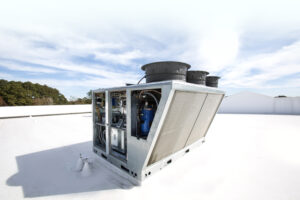
EcoPack™ HVAC system for retrofit grow
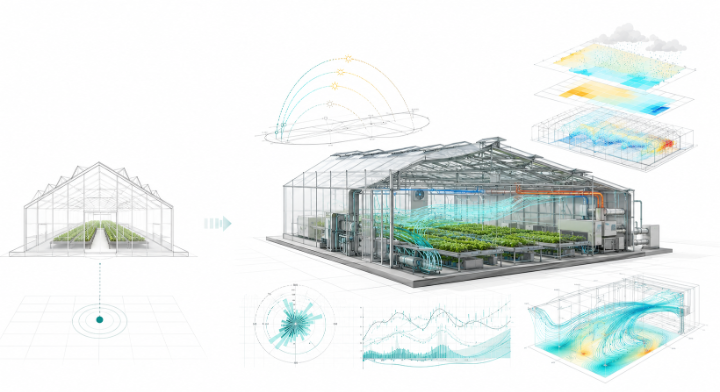
greenhouse energy modeling

What Does a Greenhouse HVACD System Do?

A greenhouse HVACD system keeps temperature, humidity, and air movement within the range a crop requires. These conditions affect plant health, disease pressure, yield, and product consistency. Heating, cooling, and dehumidification also account for a substantial share of energy use in year-round production.

A well-matched HVACD strategy helps growers:

  • Hold target temperatures across all seasons
  • Control humidity and limit conditions that favor disease
  • Manage vapor pressure deficit (VPD) for consistent transpiration
  • Improve crop uniformity and quality
  • Reduce energy consumption and equipment cycling

HVACD performance depends on the surrounding greenhouse. Glazing, orientation, shading, ventilation, and supplemental lighting all change heating, cooling, and moisture loads, so Ceres designs the mechanical system alongside those elements.

How Does Integrated Design Differ From a Multi-Vendor Approach?

On many greenhouse projects, the structure, HVAC equipment, environmental controls, supplemental lighting, energy systems, and mechanical engineering come from separate providers. Each provider designs to its own scope, and coordination between systems happens during installation and commissioning.

In an integrated approach, one team is responsible for how those systems perform together. Ceres designs the structure and technologies under a single scope, so equipment capacity, control sequences, and envelope decisions are set against the same performance targets. This reduces the risk of oversized or undersized equipment, conflicting control strategies, and extended commissioning.

What Does Ceres Evaluate When Designing a Greenhouse HVAC system?

Our team evaluates:

  • Greenhouse orientation and envelope design
  • Thermal performance
  • Ventilation requirements
  • Humidity control strategies
  • Supplemental lighting loads
  • Crop-specific climate requirements
  • Environmental controls integration
  • Energy efficiency opportunities

Each of these is evaluated in a single energy model, so the effect of one decision on the others is measured before equipment is selected.

How does Ceres size HVACD systems with energy modeling?

Ceres sizes greenhouse HVACD equipment using IESVE, a building performance simulation platform that models how a specific greenhouse will perform in its specific climate. The model runs a full 8,760-hour year of local weather data, calculates heating, cooling, and dehumidification loads hour by hour, and tests candidate mechanical systems against those loads before any equipment is specified.

IESVE (Integrated Environmental Solutions Virtual Environment) models the greenhouse envelope, local climate, and mechanical systems together, so the loads used for HVACD sizing reflect how those systems interact. Learn more about greenhouse simulation and energy modeling.

How does the modeling process work?

Each step builds on the one before it, starting with the site's climate and ending with a validated equipment selection.

  1. Establish the site climate baseline

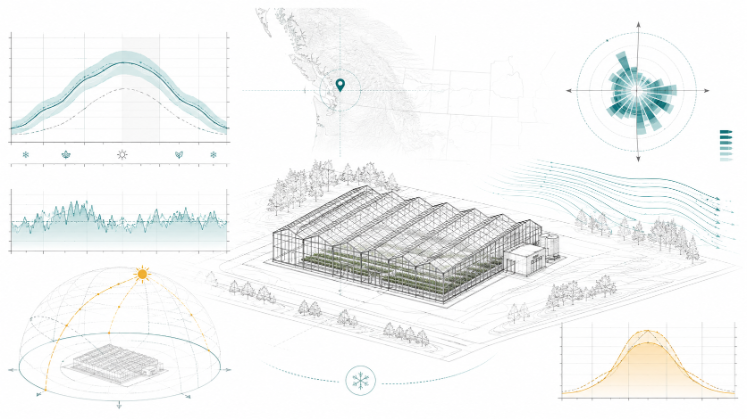
    Every project starts with a Climate Assessment built on measured historical weather data where available, or TMY (Typical Meteorological Year) files based on long-term observations. For HVACD design, the assessment defines the design-day heating and cooling conditions, seasonal humidity and condensation potential, and ground temperatures that inform geothermal and radiant system design.

  2. Calculate heating, cooling, and dehumidification loads

    The model calculates peak heating demand from envelope losses, infiltration, and glazing performance, and peak cooling demand from solar gain and internal equipment heat, including supplemental lighting. It separates latent loads (moisture) from sensible loads (temperature), which is central to dehumidification sizing because plant transpiration adds moisture continuously. Passive solar design and natural ventilation are credited in the model, so mechanical capacity is sized to the load that remains. Load profiles cover the full year rather than design days alone.

    Related reading: Humidity and Environmental Control Analysis and Natural Ventilation Modeling and CFD Airflow Analysis

  3. Simulate candidate HVACD systems

    Hydronic heating, heat pumps, chillers, dehumidification, energy recovery ventilation, and thermal storage are simulated against the modeled loads under local conditions and the planned control strategy. Equipment manufacturers publish performance at rated conditions, and the simulation shows how that equipment performs at part load in your climate. The configuration selected for the project is the one that meets the loads with the lowest modeled energy use and the most stable environmental control.

    Related reading: HVAC System Simulation in Greenhouse Design

How does energy modeling compare with standard HVAC sizing?

Standard sizing approachCeres energy modeling approach
Equipment sized to a peak design-day loadEquipment sized to a full 8,760-hour load profile
Moisture load estimated from rules of thumbLatent and sensible loads calculated separately
Performance based on rated equipment dataPart-load performance simulated in the local climate
Natural ventilation estimated separately from mechanical sizingNatural ventilation offset modeled against mechanical cooling capacity
System type selected before loads are modeledCandidate systems compared against modeled loads

What does the energy model provide?

Modeling results give your project team a documented basis for equipment selection and procurement, projected energy use for operating budgets and financing, and comparisons between system configurations, such as gas-fired heating versus full electrification with heat pumps. Where utility program rules allow, the same outputs can support rebate and incentive applications.

Download the Greenhouse Performance Guide How Ceres uses building performance simulation in greenhouse design.

How does integrated design reduce greenhouse energy use?

Energy is consistently one of the largest operating costs in year-round greenhouse production. When HVACD equipment is sized from modeled loads and coordinated with the envelope, shading, and controls, the facility is optimized as a whole rather than one piece of equipment at a time.

Depending on climate and design, outcomes can include:

  • Lower peak heating demand through passive solar design and envelope selection
  • Lower cooling loads through shading strategy and natural ventilation
  • Dehumidification capacity matched to modeled latent loads
  • Less equipment cycling from right-sized systems and coordinated controls
  • Heat recovery from exhaust air and process heat
  • Electrification and renewable energy planning, including PV demand offset

Each of these is modeled for the specific project, so the expected effect on energy use is quantified before construction.
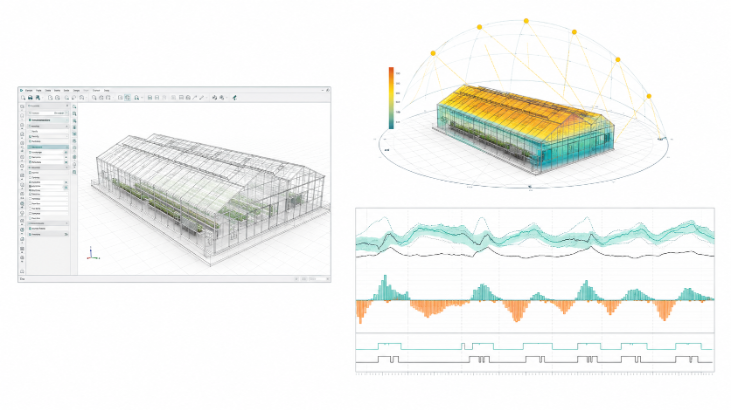
IESVE greenhouse energy model showing the 3D building model, a solar exposure map, and hourly heating and cooling load results

How is humidity controlled in a greenhouse?

Greenhouse humidity is controlled through a combination of ventilation, heating, air circulation, and mechanical dehumidification, coordinated by the environmental control system.

The right balance depends on climate, crop, and season. Ceres uses modeled latent loads to determine how much of the moisture load ventilation can handle and how much requires dehumidification equipment.

Humidity modeling identifies seasonal moisture patterns and condensation risk during design, and CFD analysis locates the stagnant zones where moisture accumulates.

Excess humidity can contribute to:

  • Fungal and bacterial disease pressure
  • Condensation on glazing, structure, and crop surfaces
  • Reduced transpiration
  • VPD outside the crop's target range
  • Inconsistent crop performance

Which HVACD Systems Does Ceres Offer?​

Ceres offers two HVACD systems. Each is selected and configured from the energy model based on the project’s performance targets, greenhouse design, and operating goals.

EcoPack™ HVACD System

The EcoPack™ provides heating, cooling, and dehumidification configured for greenhouse environments, with flexible deployment across facility layouts and project phases.

  • Heating, cooling, and dehumidification in one system
  • Flexible deployment options
  • Integration with greenhouse controls
  • Scalable across zones and expansion phases

EcoLoop™ Geothermal HVACD

The EcoLoop™ pairs geothermal exchange with heating, cooling, and dehumidification. Using the ground as a heat source in winter and a heat sink in summer provides stable capacity year-round. Ground temperature data from the Climate Assessment informs the geothermal design. The EcoLoop™ suits facilities prioritizing long-term operating costs and sustainability targets.

  • Geothermal heating and cooling
  • Integrated dehumidification
  • Stable year-round climate control
  • Designed for low operating energy use


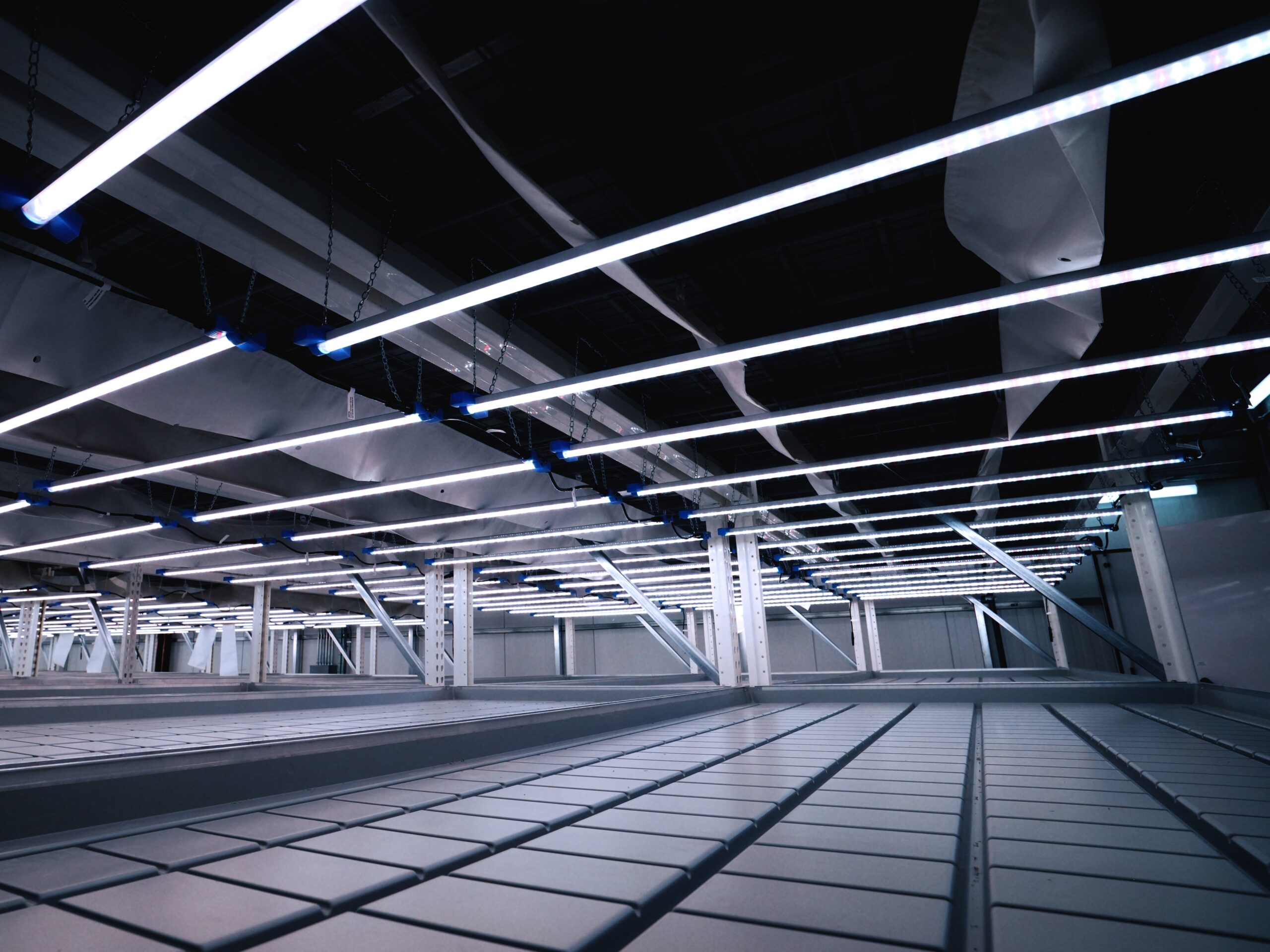
LED supplemental lighting and fabric air distribution ducts above rolling benches at the KWS Seeds research facility in Kimberly, Idaho
KWS Seeds, Kimberly, Idaho. View the project

How does HVACD work with other Ceres greenhouse technologies?

Ceres designs HVACD systems together with the SunSense™ Controller, supplemental lighting, and the greenhouse structure, because each one changes the loads and operating conditions the mechanical system has to manage.

SunSense™ Controller

The SunSense™ Controller coordinates temperature, humidity, airflow, lighting, and equipment operation. Control strategies evaluated in the energy model inform how the controller is set up for the facility.

About the SunSense™ Controller

Lighting management

Supplemental lighting adds heat and affects humidity. Modeling lighting loads alongside HVACD keeps mechanical capacity aligned with the lighting schedule.

About supplemental lighting

Greenhouse structure design

Glazing selection, insulation, orientation, and airflow patterns set the loads the HVACD system has to meet, which is why Ceres designs the structure and mechanical systems together.

About Ceres greenhouses
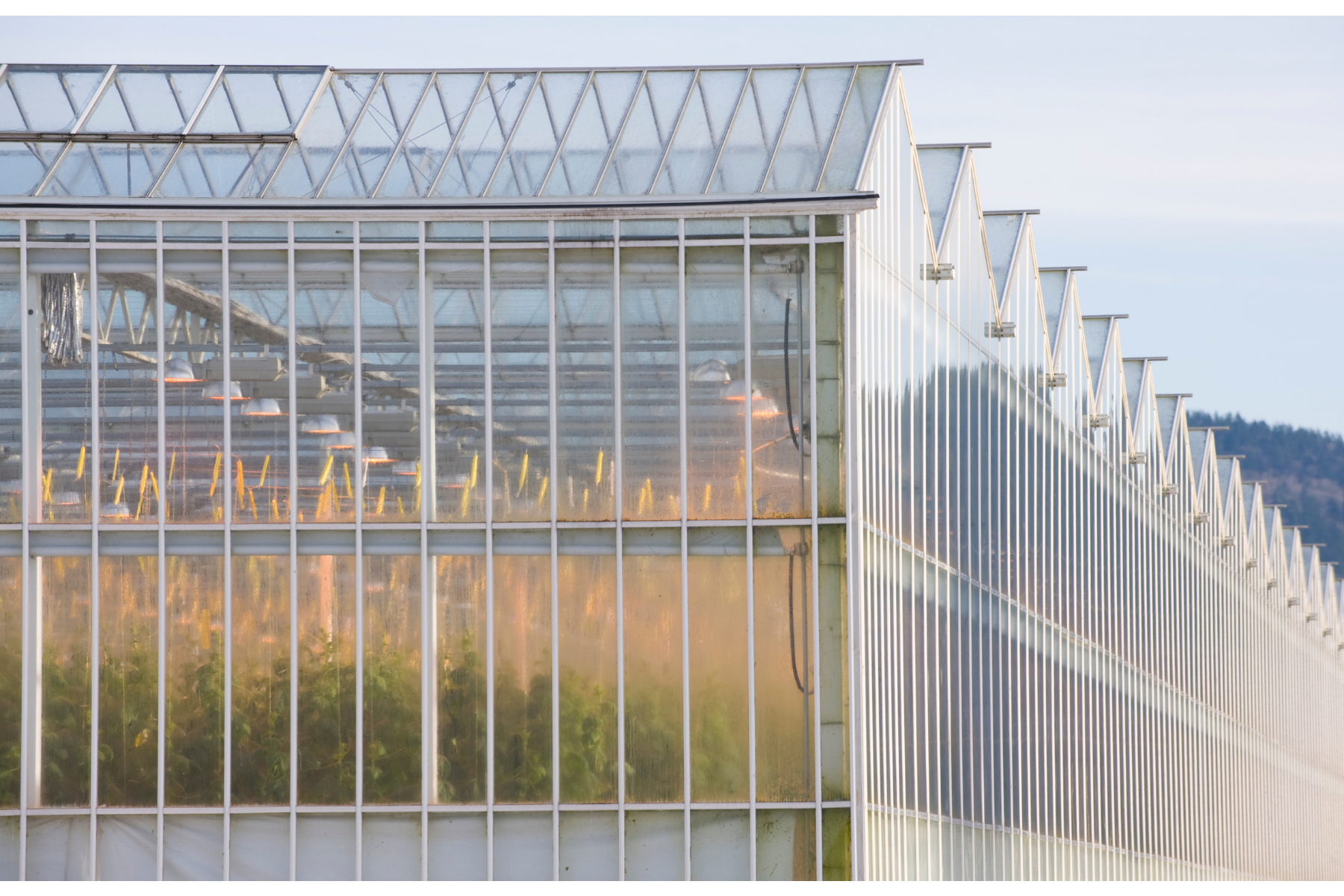
imported greenhouse structure- glass greenhouse

What Types of Facilities Does Ceres Design HVACD Systems For?

  • Commercial produce greenhouses
  • Propagation and nursery operations
  • Research greenhouses
  • Cannabis cultivation facilities
  • Educational and institutional greenhouses
  • Residential greenhouses

Each project is designed around crop requirements, climate conditions, operational goals, and energy performance objectives.

Greenhouse Technology

Access Greenhouse Tech Related Brochures

Get detailed specs, design options and more inside
greenhouse technologies brochure cover

By clicking the button above, you agree to receive emails from Ceresgs.com. Unsubscribe at any time.

Related HVAC Videos

HVAC(D) FAQs

HVACD stands for heating, ventilation, air conditioning, and dehumidification. The added “D” reflects the role of moisture control in greenhouses, where plant transpiration creates a continuous latent load.


Greenhouse HVAC is commonly sized with peak load calculations for design-day conditions. Ceres sizes equipment with IESVE energy modeling, which simulates a full year of local weather hour by hour and calculates heating, cooling, and dehumidification loads based on the specific greenhouse design.

The Ceres EcoLoop™ is a hybrid Ground-Coupled-System, commonly known as a geothermal system in the United States and a Ground-Source-Heat pump in Europe. Some of the unique advantages of the EcoLoop™ system over a conventional geothermal system are the system’s heating and cooling load capacities, redundancy, resilience, and it’s low environmental impact. Also, the Ceres EcoLoop™ is minimally invasive to the earth, as the system sits 6′ below grade (opposed to the 400′ bore holes of traditional vertical geothermal systems). 
Material costs for installation of the EcoLoop™ range from about $50-65/sqft, and determined based on such factors as: different climate zones, size of grow operations, etc. Payback for this system occurs at roughly one year.  Because of it’s energy efficiency rating, the EcoLoop™ system may qualify for a multitude of rebates.

The EcoLoop™ system is a two part installation, below grade and above grade. This can be completed by the same contractors or two different contractors. The below grade contractors should be International Ground Source Heat Pump Association certified installers. Above grade work can be completed by a local HVAC contractor.

Yes. Ceres provides consulting for Ceres and non-Ceres structures, and an energy model of an existing facility can be used to evaluate upgrade and retrofit options.

Energy modeling outputs can serve as technical documentation for utility rebate and incentive applications where program rules allow. Ceres supports clients through this process.


Ceres is happy to connect our clients to trained professionals for installation of the EcoLoop™ system.
Contact us for more information
The EcoLoop™ is a closed loop system, whereby water is continuously circulating in the closed ground loop and through the heat pumps, in order to transfer heat between the grow-spaces, the ground, and the outside environment.

At this point in time, Ceres is installing the EcoLoop™ only in Ceres Greenhouses.  The EcoLoop™ has been optimized for high performance and efficiency using specific controls, operating parameters, and smart responses to changing conditions

Yes. The EcoLoop™ system can be run using renewable sources of electricity. Additionally, the EcoLoop™ design overall reduces the peak demand load compared to other HVAC systems, helping to reduce the overall size of the energy generation system.

There are pretty stark differences between both systems, making it hard to compare.  The GAHT® system is a lower tech air-to-ground heat exchanger, which can’t deliver specific temperatures but does aid with both heating and cooling, reducing overall operational costs.  The EcoLoop™ and EcoPack™ are more powerful mechanical HVAC systems, which cools, heats, and dehumidifies based on specific set points and controlled by Ceres’ Smart Controller. In general, the GAHT® system is best suited for a Ceres vented greenhouse, and the EcoLoop™ or EcoPack™ is optimal for a Ceres sealed greenhouse facility.

It depends on the project stage. Common starting points include a Climate Assessment Report, a full thermal and HVAC simulation to support schematic design, or a CFD study for a specific ventilation or airflow question.

Plan your greenhouse HVACD system with Ceres

Every Ceres project begins with a discovery conversation about project location, size, crop type, climate conditions, and performance objectives. From there, we scope the modeling and design work that fits your project stage, whether you are planning a new greenhouse or upgrading an existing operation.

Speak with a Ceres greenhouse systems engineer


Tell Us About Your Project