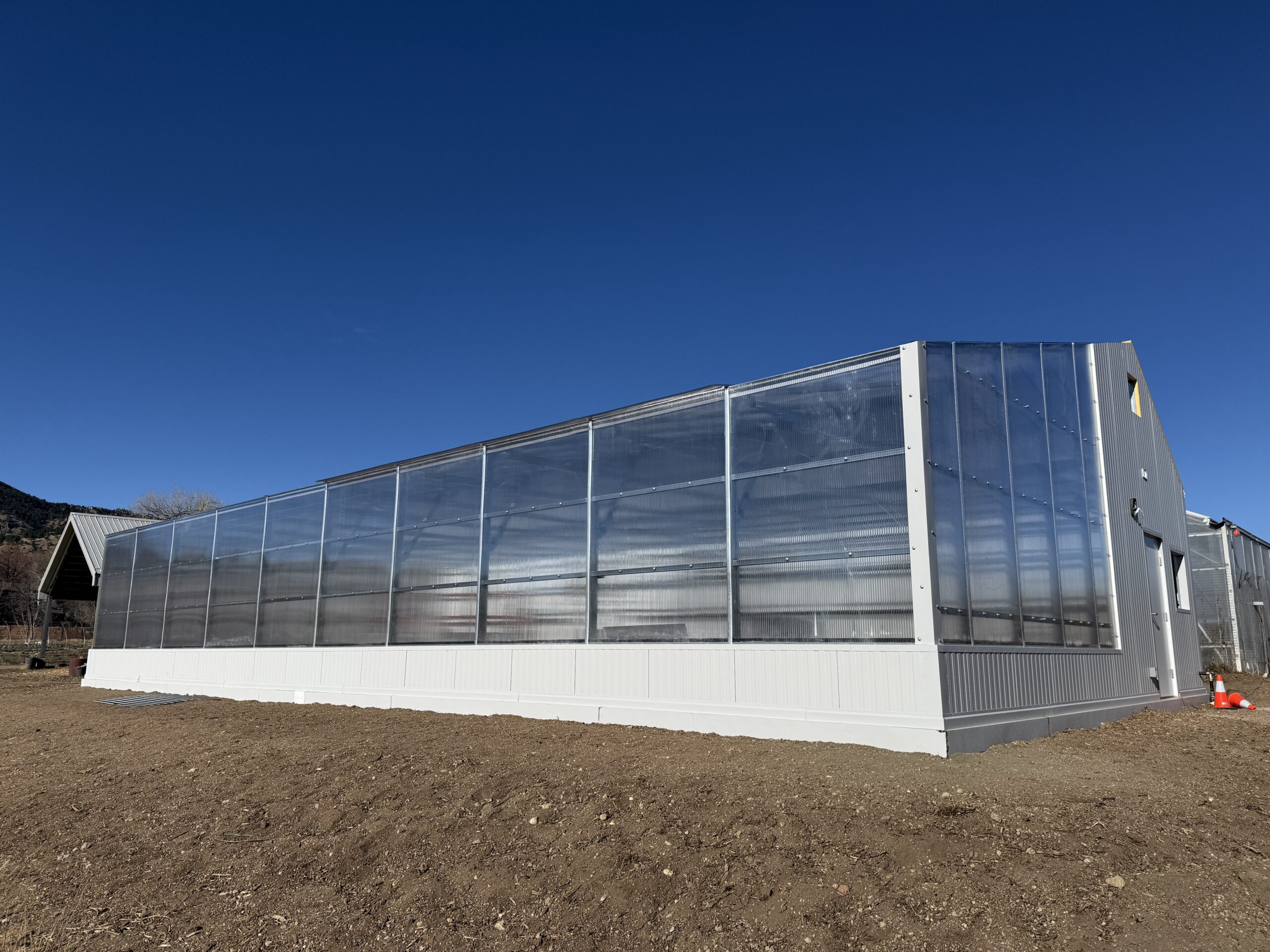
Location: Boulder, Colorado
Climate Zone: 5b
Size: 30’x60′
Application: Community
Technologies: SunSense™, wetwall, mechanical dehumidification
Date Completed: 2026
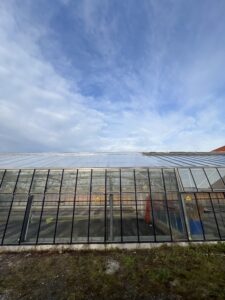
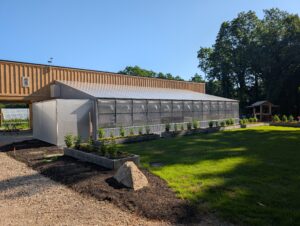
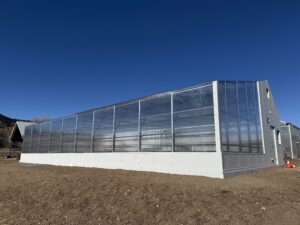
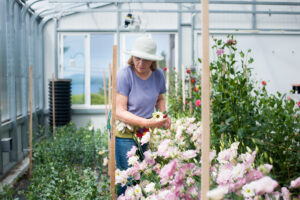
Ceres designed a 30’ x 60’ HighYield™ Kit greenhouse for the nonprofit Growing Gardens after the organization secured grant funding to expand its seedling production program. The greenhouse was installed at their Boulder farm, located less than five miles from our main office.
To learn more about the grants that supported this project, check out our blog: Growing Grant Opportunities.
Growing Gardens is rooted in community, food access, and sustainability. Their mission is to “cultivate community through regenerative urban agriculture,” which they achieve by increasing equitable access to fresh food, offering hands-on education, and reconnecting people with how their food is grown.
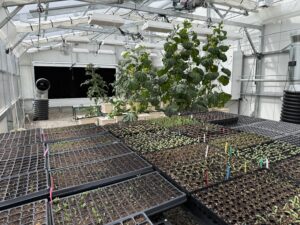
The organization partnered with Ceres to build a four-season greenhouse that would significantly expand their seedling production. These seedlings are distributed to low-income families, empowering them to grow their own food. While the site already included two existing (non-Ceres) greenhouses, those structures are energy-inefficient and costly to heat and cool, limiting their use to certain times of the year. In contrast, the new Ceres greenhouse enables Growing Gardens to start seedlings as early as the winter months, thanks to its highly insulative and energy-efficient design.
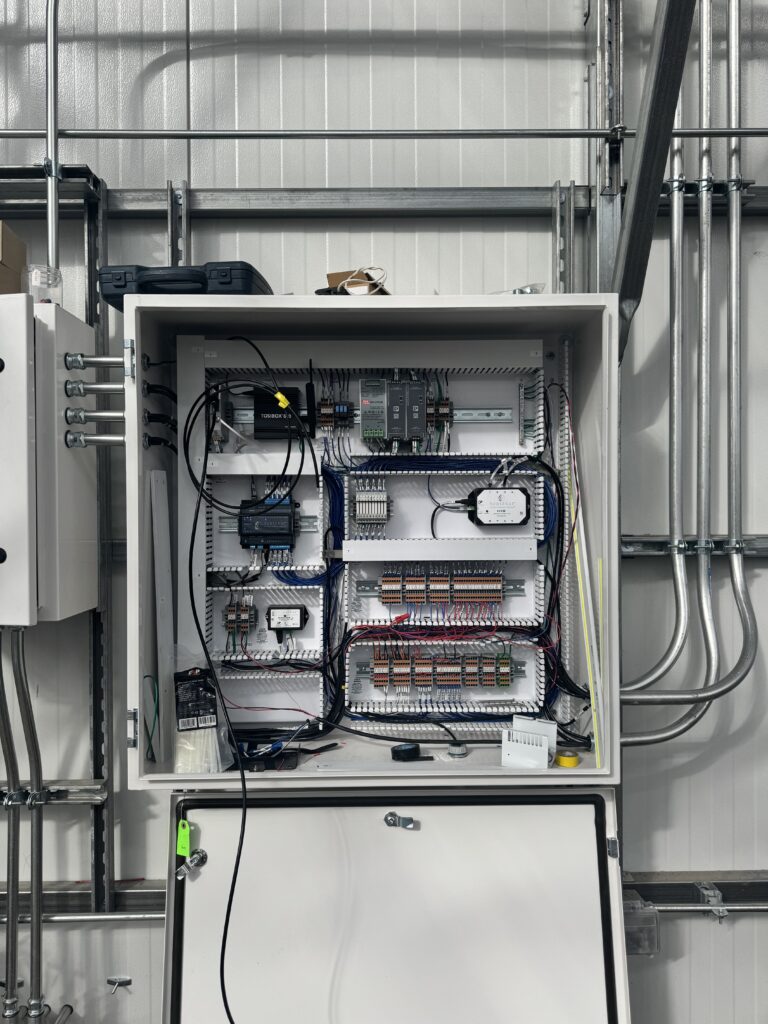
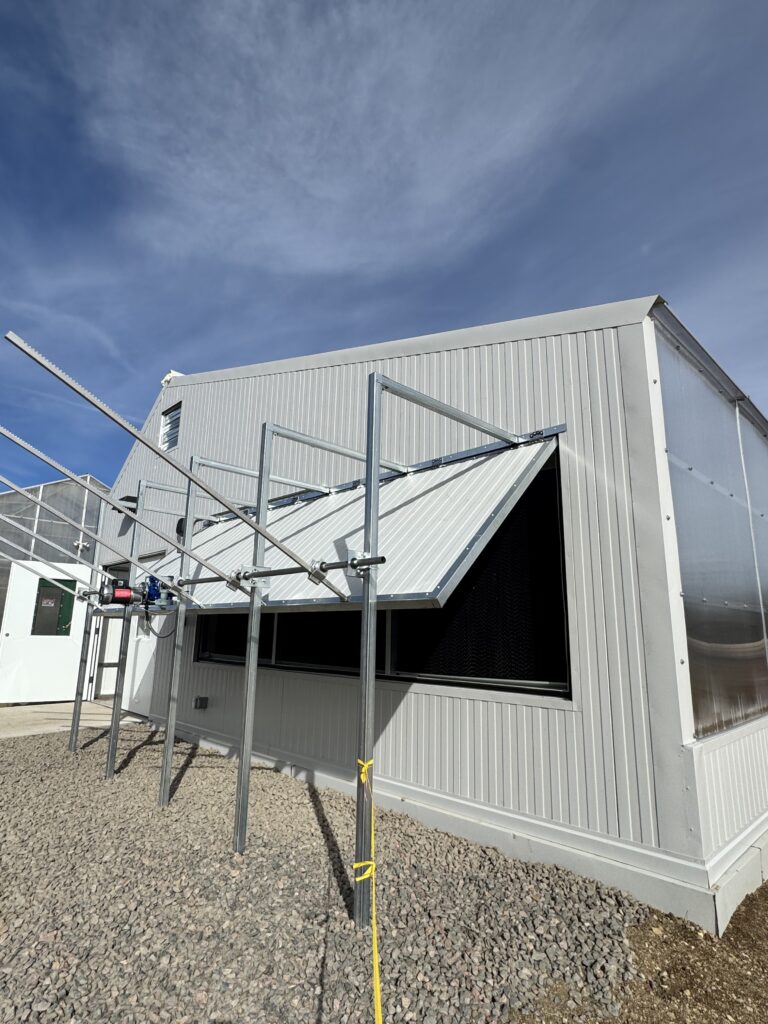
As with all Ceres projects, this greenhouse was customized to align with both the client’s production goals and Boulder’s climate. The design includes a wet wall evaporative cooling system, which is particularly effective in Boulder’s hot, dry conditions, providing substantial cooling with minimal energy use. A Ceres SunSense™ controller was also integrated, allowing staff to easily monitor and automate the greenhouse environment through a user-friendly interface—freeing up more time to focus on plant care.
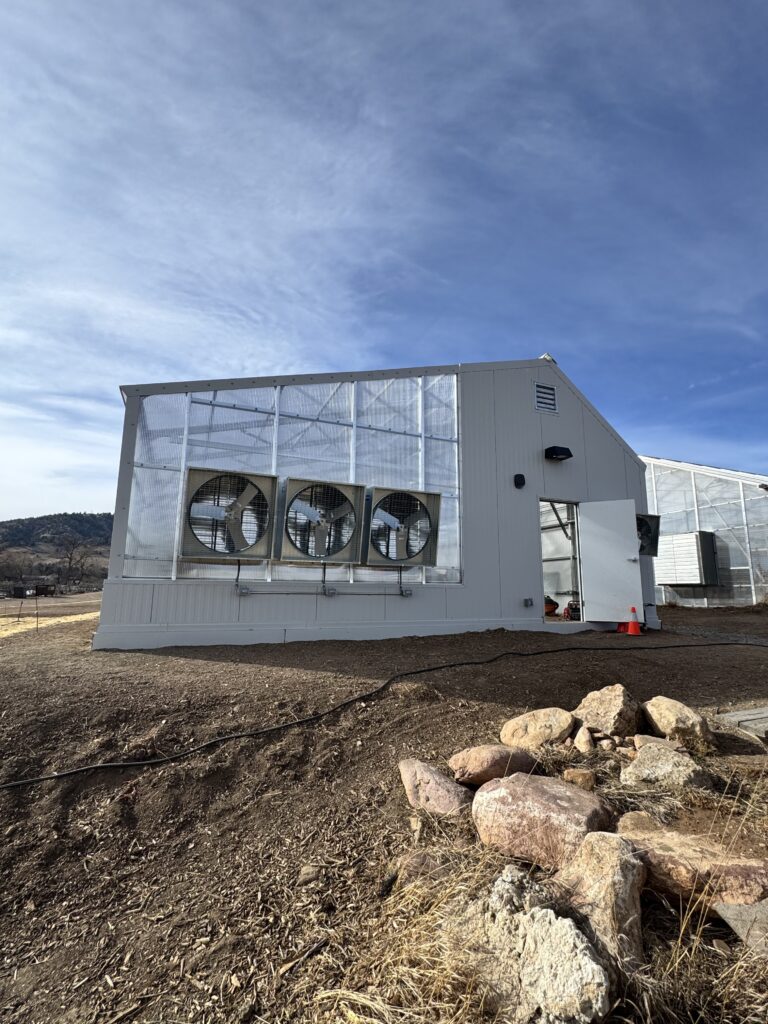
Additional design features enhance both functionality and user experience. Slant exhaust fans on the east side of the greenhouse operate more quietly than traditional systems, creating a more comfortable working environment. Inside, a concrete slab covers the front third of the greenhouse, offering a clean, organized space for classes, workshops, and other activities. This climate-controlled environment ensures that staff and volunteers can work comfortably year-round.
This greenhouse will have a meaningful impact on the local community. By increasing capacity, Growing Gardens will be able to grow an additional 8,000 vegetable seedlings each spring—a 33% increase—all of which will be donated to individuals and families with limited access to fresh food. These seedlings support long-term food security by enabling people to grow their own nutritious produce. The expanded production will also strengthen Growing Gardens’ broader efforts across their Boulder and Longmont sites, supporting increased donations and educational programming throughout the region.
Early Results: More Capacity, Less Guesswork
Since moving into the new greenhouse, Growing Gardens has already felt the difference in daily operations. Before the expansion, staff had to shove plants into every available corner of the organization’s two existing greenhouses, on the floor, under benches, up in the rafters, and even hanging from the roof, just to keep up with demand. That meant constant physical labor moving plants around to keep them healthy, according to the organization’s executive director. With a third greenhouse now online, Growing Gardens expects to grow seedling production by roughly a third in its first year alone, freeing up staff time that used to go toward shuffling plants from corner to corner.
The greenhouse’s monitoring system has also changed how the team manages the space day to day. Growing Gardens’ greenhouse and facilities manager said the dashboard tracking temperature, humidity, and other conditions takes the fear out of greenhouse management, giving her the confidence to walk away at the end of the day and trust the space rather than relying on her own research or a call to another greenhouse operator. That added reliability is showing up in the program’s output too: seedling donations are on pace to grow by about 27% this year, expanding the organization’s food access efforts across the county and putting more starts directly into the hands of community members growing their own food.
Contact us to learn more