Gutter Connected Greenhouses for Commercial Growing
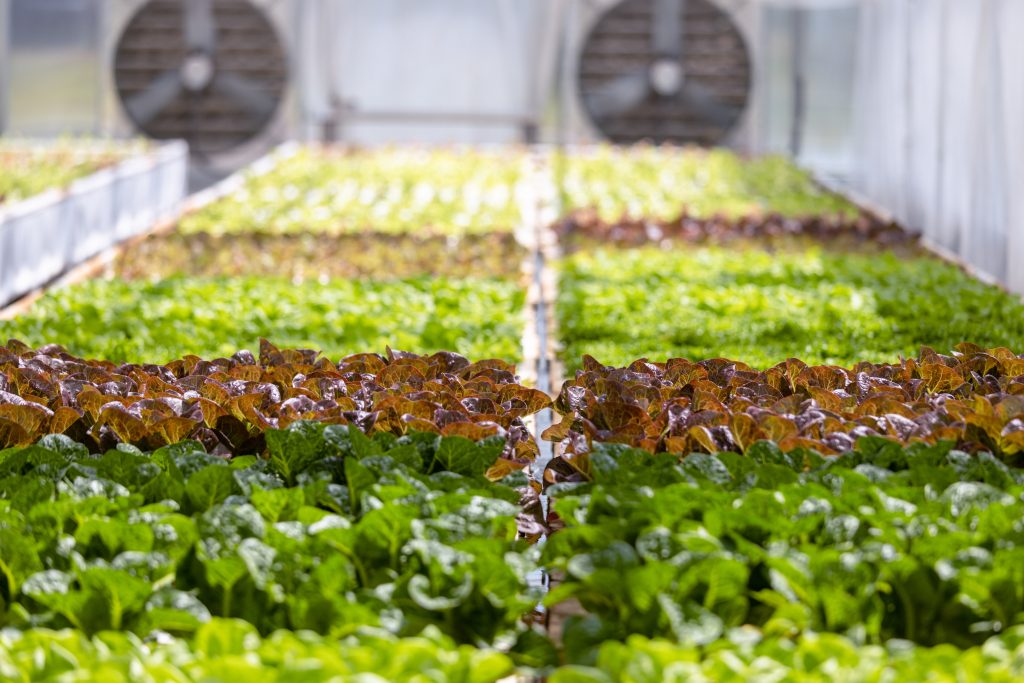
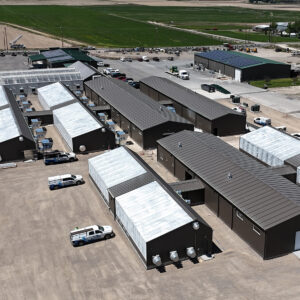
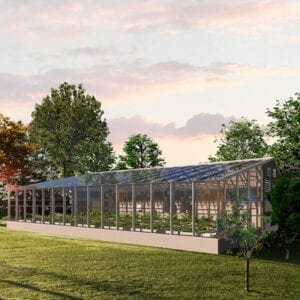
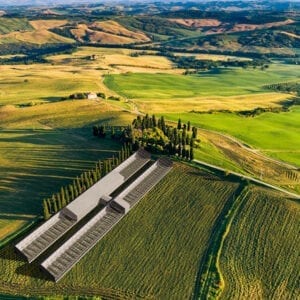
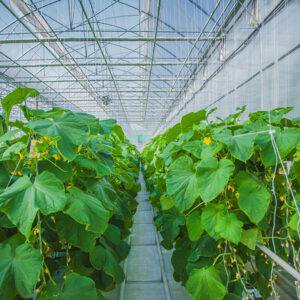
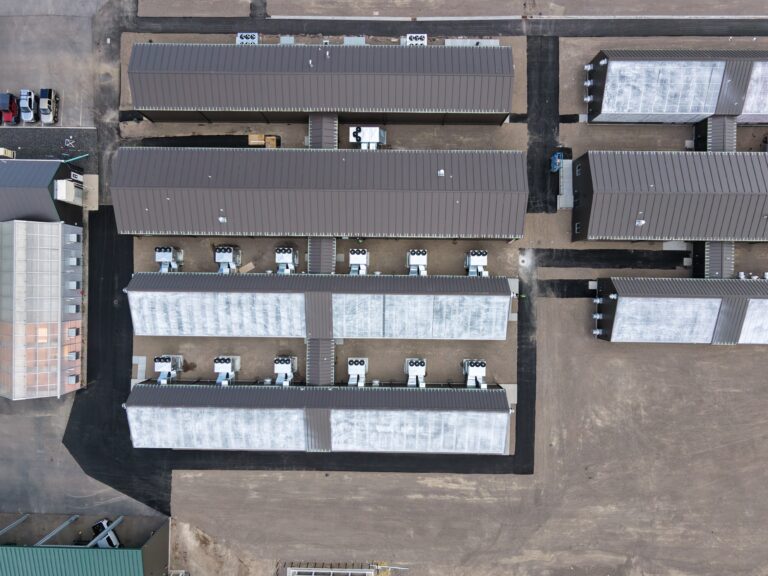
Gutter-connected greenhouses, also known as multi-span greenhouses, are one of the most widely used solutions for large-scale commercial growing. By connecting multiple bays at the gutter level, these systems maximize growing area, improve operational efficiency, and support centralized climate control.
At Ceres, we design commercial greenhouse systems that integrate structure, climate systems, and operational workflows to support long-term performance and scalability.
Benefits of Gutter Connected Greenhouses
Common Applications of a Gutter Connected Greenhouse
- Commercial food production
- Nursery and propagation operations
- Large-scale controlled environment agriculture (CEA)- typically over one acre
- University facilities
Is a Gutter Connected Greenhouse Right for Your Project?
This style of greenhouse is best fit for:
- Operating in warmer climates where high insulation is unnecessary
- Working within spatial constraints that require efficient land use
- Projects that are planning for future expansion of the growing area
- Large-scale commercial projects
Gutter Connected Greenhouse or HighYield™ Kit?
Gutter-connected greenhouses are an ideal solution for large-scale commercial greenhouse growers requiring uninterrupted growing space. While gutter-connected greenhouses offer strong advantages in scalability and cost efficiency, other greenhouse types may be better suited for specific use cases.
Ceres works closely with each client to determine the most suitable structure based on their specific application, site conditions, and long-term goals. We evaluate both upfront material costs and ongoing operational expenses to ensure the selected greenhouse system delivers optimal performance and value over time.
Customized Business Solutions for the Commercial Greenhouse Grower
If a gutter-connected commercial greenhouse is determined to be the optimal design solution, we offer a range of integrated upgrades to enhance system performance and adaptability, including:
- Wet wall evaporative cooling
- High-pressure fogging systems
- Automated roof venting
- Polycarbonate or ETFE glazing options
- SunSense™ environmental control system
- LED supplemental lighting
- Enclosed connecting corridors for seamless facility flow
- Headhouse structure and layout
These systems can be incorporated into a new standalone structure or added to an existing greenhouse to support phased expansion—ensuring flexibility as your operation grows.
Access All Greenhouse Related Brochures
Get detailed specs, design options and more inside
Calculate Your Energy Savings
Find out how much you can save with Ceres Greenhouses compared to other greenhouses.
Watch Greenhouse Video Content
Check Out Our Past Projects
Commercial Greenhouse Technology
One centralized system for controlling the whole environment. Monitor temperature, relative humidity, and CO2, leaf/ canopy temp, PAR, lighting zones, and outdoor weather.
We offer Ceres designed EcoLoop™ or EcoPack™ HVAC options depending on growing goals, budget, site constraints, and greenhouse type.All Ceres environmental controls are custom integrated to suit your needs.
The GAHT® system is a ground to air heat exchanger, a system often referred to as a ‘Climate Battery’. Ceres leads the industry in climate battery technology, having designed and installed more systems in greenhouses than any other company in the world.
Different crops may demand specific lighting requirements. We offer a variety of lighting solutions designed to suit the needs of each individual operation.
A NetZero greenhouse will have zero net emissions. This goal is achieved through capturing and storing energy. This can be done using a various system options.
Ethylene tetrafluoroethylene is a durable, high light transmissive glazing option. It offers more than 95% light transmission, including the UV spectrum. More than other greenhouse companies, Ceres is implementing full spectrum glazings for maximum crop growth.
Gutter Connected Greenhouse Kits FAQs
A multi-span greenhouse where individual bays are connected at the gutter to form a single large structure.
Yes, they are one of the most common greenhouse types used in commercial agriculture.
Gutter-connected greenhouses are particularly well suited for large-scale commercial operations because they make efficient use of available land. Additionally, due to the large square footage and overall volume of these facilities, the lower insulation value of the exterior walls has less impact on overall energy efficiency compared to smaller greenhouses
Crop type is less of a determining factor than scale when it comes to gutter-connected greenhouses, as these structures are designed primarily to support large-scale growing operations. With proper environmental controls and layout, virtually any crop can be well suited for this type of greenhouse.
Check out our past projects to see examples of what people grow in all of our greenhouses
Yes, provided the performance and operating requirements of the facility are understood from the outset. In colder winter climates, heating costs can be significant depending on temperature setpoints; however, due to the large overall volume of gutter-connected greenhouses, the lower insulation value of the glazing has a reduced impact on overall energy efficiency.
Gutter-connected greenhouses generally become more energy efficient as their overall size increases. Most are glazed with 8 mm polycarbonate, so a relatively small configuration—such as two 30′ × 100′ greenhouses combined into a 60′ × 100′ structure—would not be particularly energy efficient. However, these facilities do offer roof venting, which provides a passive and energy-efficient method of cooling during the summer months. As the scale increases to an acre (approximately 45,000 square feet) or even a hectare (approximately 100,000 square feet), the impact of the glazing becomes far less significant, and overall energy efficiency improves substantially.
Heating: Most gutter-connected greenhouses are heated using boiler systems that circulate hot water. Heat is typically distributed around the perimeter of the structure and beneath the growing beds to maintain warm root zones. Some smaller facilities instead use gas-fired unit heaters to heat the air directly.
Ventilation: The majority of gutter-connected greenhouses rely on roof venting to release excess heat, with wall vents allowing cooler, fresh outside air to enter. Some facilities also use exhaust fan systems, which may include evaporative cooling. While fan-based systems offer greater control, they come with higher operational costs compared to passive roof venting.
Gutter-connected greenhouses manage airflow and humidity through several methods. Many rely on passive ventilation using the stack effect, in which cooler air enters through lower wall openings and warm, humid air exits through roof vents at the peak of the greenhouse. This approach can also support dehumidification through a technique often referred to as “burping,” where vents are briefly opened and closed based on humidity levels to release moist air and reduce overall humidity.
In facilities that use exhaust fans, airflow typically moves from endwall to endwall. Depending on the capabilities of the greenhouse control system and the fans themselves, dehumidification can be handled in a similar manner by operating the fans for short intervals as needed to lower humidity levels.
Costs vary based on size, location, and systems, but are typically lower per square foot than standalone greenhouses at scale.
Yes, gutter-connected greenhouses can be expanded over time. Expansion is typically easiest when using the same manufacturer as the original structure to ensure compatibility, but it is also possible to connect additional sections from a different manufacturer with proper planning and design.
Another term for a gutter-connected greenhouse, referring to multiple connected growing bays.
Build a Greenhouse That Scales With You
Work with a team that understands how greenhouse systems perform in real-world operations.